




What's Happening?
A bipartisan group of U.S. lawmakers, including Democratic Senator Jeanne Shaheen of New Hampshire, Republican Senator Thom Tillis of North Carolina, independent Senator Angus King of Maine, and Republican Representative Mike Turner of Ohio, has formally
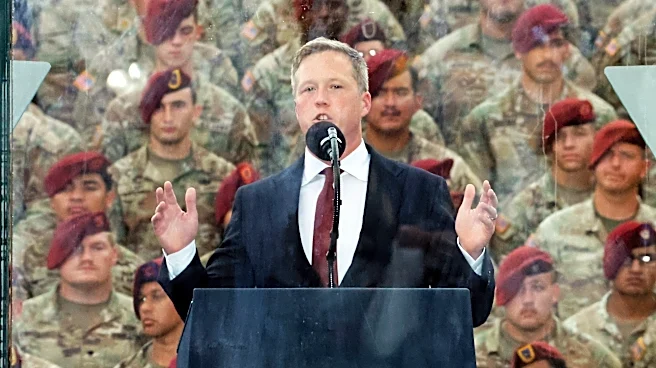
requested an explanation from the Army regarding its decision to stop a European-based military unit from specializing in drone warfare. The 173rd Airborne Brigade, comprising 600 soldiers, was established in November to focus on drone operations, including building its own drones and practicing tactics similar to those used in conflicts in Ukraine and against the U.S. The lawmakers expressed significant concerns that this move would impede the U.S. military's ability to learn from allies, particularly the Ukrainian Armed Forces, and hinder the modernization of drone warfare at a necessary pace. They have requested a briefing by September 21 from departing Army Secretary Dan Driscoll and General Christopher LaNeve, the Army’s acting chief of staff, to understand the data, analysis, and process behind this decision, and whether it originated from Pentagon leadership or internally within the Army. This inquiry comes amidst a leadership shakeup within the Army, including the recent ousting of former Army Chief of Staff General Randy George and the resignation of Secretary Driscoll.
Why It's Important?
This inquiry is important because it highlights a critical debate within the U.S. military regarding the future of warfare and technological adaptation. The lawmakers' concerns underscore the perceived strategic disadvantage of discontinuing specialized drone units, especially given the evolving nature of global conflicts where uncrewed systems play an increasingly vital role. The decision to halt the 173rd Airborne Brigade's drone specialization could impact the Army's readiness and its ability to effectively counter adversaries who are rapidly advancing in drone technology and tactics. Furthermore, it raises questions about inter-service communication and decision-making, particularly with the recent leadership changes at the top of the Army. Maintaining momentum in drone warfare modernization is crucial for national security, as it directly affects the protection of American troops and the effectiveness of military operations. The outcome of this inquiry could influence future defense spending, military training priorities, and the overall strategic direction of the U.S. Army in an era of rapid technological change.
What's Next?
The bipartisan group of lawmakers expects a briefing from the Army by September 21 to explain the rationale behind disbanding the drone specialization unit. This briefing will likely involve discussions with General Christopher LaNeve, the Army’s acting chief of staff, and potentially other high-ranking officials. The lawmakers will seek to understand the data and analysis that informed this decision, as well as whether it was a directive from the Pentagon or an internal Army choice. Depending on the Army's explanation, the lawmakers may pursue further actions, such as legislative measures to ensure continued investment in drone warfare capabilities or additional oversight hearings. The departure of Secretary Dan Driscoll and the prior ousting of General Randy George add a layer of complexity, as both were proponents of integrating modernized unmanned aircraft systems. The response from the Army will be critical in determining whether the lawmakers' concerns are alleviated or if further scrutiny and potential policy interventions will be deemed necessary to maintain the U.S. military's competitive edge in drone technology.
Beyond the Headlines
The Army's decision to halt a specialized drone unit, despite the rapid evolution of drone warfare demonstrated in conflicts like Ukraine, points to deeper systemic challenges within large military organizations in adapting to new technologies. This situation could reflect a tension between traditional military structures and the need for agile, specialized units capable of rapid innovation. The lawmakers' emphasis on learning from allies, particularly Ukraine, suggests an acknowledgment that real-world combat scenarios are outpacing internal development cycles. This incident also highlights the potential for political and leadership changes within the Pentagon to significantly alter strategic priorities, even those with clear operational benefits. The broader implication is whether the U.S. military can foster an environment where innovation in critical areas like drone warfare is consistently prioritized and protected from bureaucratic shifts. The outcome of this debate could set a precedent for how the Army integrates emerging technologies and adapts its force structure to meet future threats, potentially influencing its long-term technological superiority and operational effectiveness.