







What's Happening?
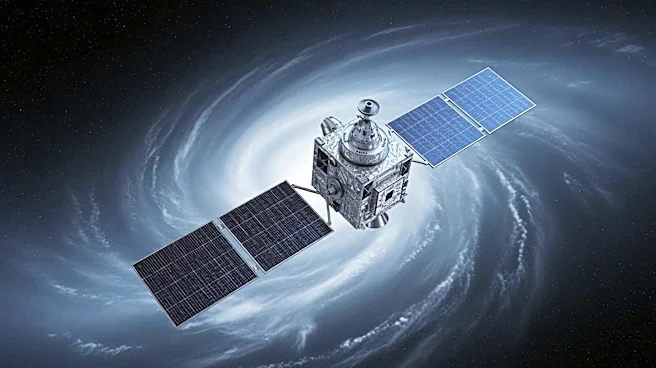
NASA's INCUS mission, aimed at studying tropical convective storms, is progressing towards its 2027 launch. The mission involves three small satellites, or SmallSats, which have completed assembly and testing. These satellites will fly in low Earth orbit
to observe the dynamics of tropical storms, which are characterized by the rapid lifting of air and water. The mission, led by Sue van den Heever from Colorado State University, will utilize radar instruments developed at NASA's Jet Propulsion Laboratory to study the vertical motion of air and water during storm development. This research is expected to enhance storm forecasting and help mitigate risks to life and property by improving decision-making in response to severe weather events.
Why It's Important?
The INCUS mission is significant as it addresses the need for better understanding and forecasting of tropical convective storms, which provide over half of the world's precipitation. These storms are crucial for freshwater supplies but also pose severe weather risks. By improving storm forecasting, the mission aims to reduce potential loss of life and property damage, benefiting communities affected by severe weather. The insights gained could also aid in managing freshwater resources more effectively, highlighting the mission's importance in both environmental and societal contexts.
What's Next?
The INCUS mission is set for a 2027 launch from NASA's Wallops Flight Facility in Virginia. As the mission progresses, further testing and integration of the third satellite will be completed. The mission is part of NASA's Earth System Observatory, which aims to study Earth's dynamic systems. Future steps include continued collaboration with commercial partners and universities to enhance the mission's capabilities and ensure successful deployment and operation.