


What's Happening?
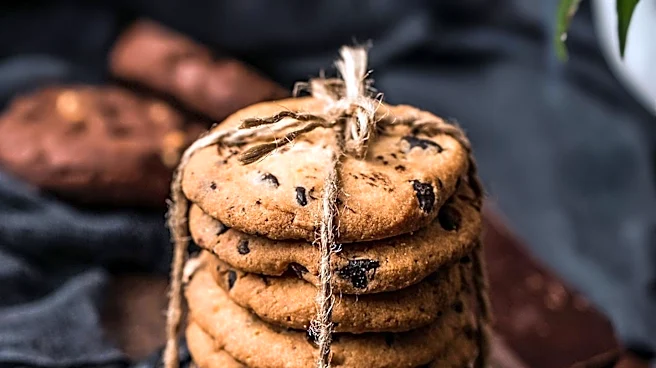
Researchers at Southern Illinois University (SIU) Carbondale have developed a method to create edible cookies, dubbed 'µBites' (microbites), from recycled plastic and agricultural waste. This innovative process, initially conceived for NASA's Deep Space
Food Challenge, involves breaking down polyethylene terephthalate (PET) plastic and agricultural waste like corn stalks and leaves using oxidative hydrothermal dissolution. This creates a liquid feedstock, which is then fed to cultured yeast. The yeast converts this feedstock into nutritious food slurries. Different strains of engineered yeast are used to produce various food ingredients, including proteins, lipids, vitamins, aromas, and flavorings, such as vanillin and beta-carotene. These ingredients are then combined into a raw dough, printed into consistent shapes using a 3D food printer, and cooked in a microwave to form the final cookie. The team presented their findings at a symposium organized by the American Chemical Society.
Why It's Important?
This development holds significant implications for addressing food scarcity and waste management, particularly in extreme or resource-limited environments. The portable and self-contained nature of the µBites system makes it suitable for deployment in submarines, disaster relief vehicles, or even future space missions to Mars or the lunar surface. By converting carbon waste from plastic and agricultural byproducts into edible food, the technology offers a sustainable solution to reduce landfill waste and provide nutrition where traditional food sources are scarce or difficult to transport. While taste tests are pending, the researchers have conducted extensive safety analyses to ensure the cookies are free from toxic chemicals, heavy metals, allergens, and food pathogens. This research could pave the way for new methods of food production that minimize environmental impact and enhance food security in challenging conditions.
What's Next?
The SIU research team plans to further refine the µBites system to improve its efficiency, aiming for nearly 100 percent conversion of carbon from waste materials into food products. Currently, the process converts over 50 percent of carbon and takes one to two days. They are also conducting simulated digestive studies and other necessary analyses in preparation for human trials. Beyond cookies, the food ingredients produced by this method could be used to create other food items requiring protein, aroma, and vitamins, such as milk and meat alternatives. The team is also exploring its application in feed manufacturing. A major hurdle to address for space applications is adapting the system to function effectively in microgravity. The long-term goal is to establish a zero-waste concept, although approximately 10 percent of carbon material may still be released as waste gas or remain unconverted.
Beyond the Headlines
The creation of edible products from plastic waste raises profound ethical and societal questions about our relationship with consumption, waste, and food. While offering a pragmatic solution for extreme environments, the concept challenges conventional notions of what constitutes 'food' and could influence public perception of recycled materials. This innovation could accelerate the shift towards circular economies, where waste is viewed as a resource rather than a disposal problem. It also highlights the increasing role of biotechnology and advanced manufacturing, like 3D food printing, in shaping future food systems. The potential for widespread adoption, however, will depend not only on safety and nutritional value but also on consumer acceptance and the ability to overcome psychological barriers associated with eating products derived from waste. This technology could fundamentally alter supply chains and resource allocation in disaster zones and remote communities, fostering greater self-sufficiency.