



What's Happening?
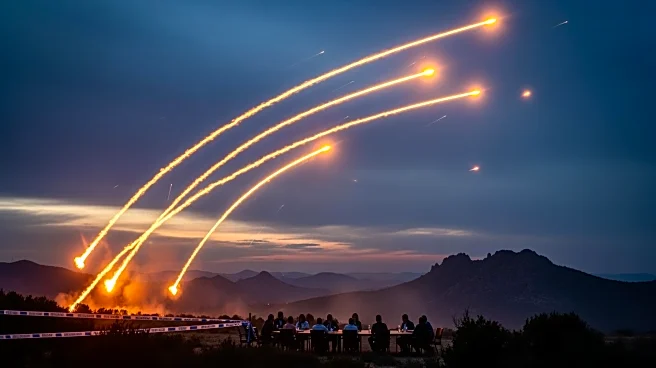
Iran has launched a series of missile barrages targeting northern Israel, marking six attacks since midnight. The Israeli Defense Forces (IDF) reported that air raid alerts were triggered across the Golan Heights, Upper and Lower Galilee, and other northern regions.
The attacks are part of a broader escalation between Israel and Iran, with repeated overnight barrages affecting both northern and central areas of Israel. The Magen David Adom emergency service reported no casualties, although several people were injured while rushing to shelters. In a separate incident, an Iranian missile killed a migrant worker in central Israel, and another missile hit a home in Jaljulia, causing damage but no casualties. Additionally, missile debris struck a residential building in Tel Aviv, resulting in minor injuries from smoke inhalation.
Why It's Important?
The missile attacks underscore the ongoing and escalating conflict between Israel and Iran, which has significant implications for regional stability. The repeated barrages have heightened tensions and put civilian lives at risk, prompting emergency responses and international concern. The conflict could potentially draw in other regional actors and escalate into a broader confrontation, affecting geopolitical dynamics in the Middle East. The attacks also highlight the vulnerability of civilian populations in conflict zones and the challenges faced by emergency services in responding to such threats.
What's Next?
The situation remains tense, with the potential for further escalations as both Israel and Iran continue to engage in military actions. The international community may call for diplomatic interventions to de-escalate the conflict. Israel is likely to enhance its defensive measures and seek support from allies to address the threat posed by Iranian missile capabilities. The ongoing conflict may also influence regional alliances and impact diplomatic relations between Middle Eastern countries.