





What's Happening?
The Environment Agency – Abu Dhabi (EAD) has conducted the second phase of its global Source-to-Sea initiative in the Republic of Korea. This event brought together policymakers, scientists, international organizations, and industry leaders to promote
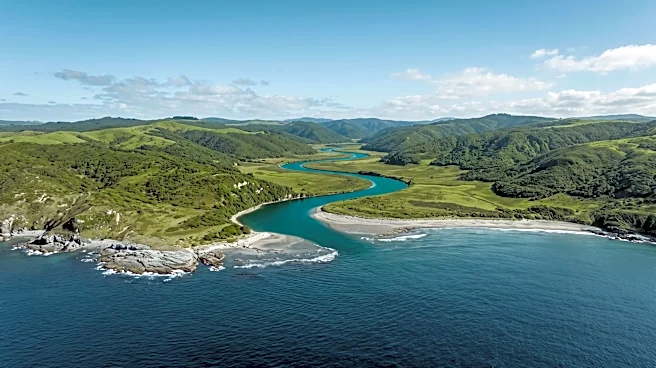
integrated water governance in anticipation of the 2026 United Nations Water Conference, which will be hosted in Abu Dhabi. The seminar, held in partnership with the Global Green Growth Institute (GGGI) and supported by the UAE Embassy in Seoul, was led by H.E. Dr. Shaikha Al Dhaheri, Secretary General of EAD. Key participants included H.E. Jamal Abdulla Al Suwaidi, UAE Ambassador to the Republic of Korea, Sang-Hyup Kim, Executive Director of GGGI, and Hyosung Ha, Deputy Director at the Republic of Korea’s Ministry of Climate, Energy and Environment (MCEE). The initiative, which began with its launch during the High-Level Political Forum in New York in July, aims to continue its global journey to other destinations before concluding at the UN Water Conference in December 2026. The seminar focused on the theme 'Different Waters, One Current,' exploring methods for countries to better integrate freshwater, coastal, and marine management through a Source-to-Sea approach, recognizing water as a continuous system from inland sources to the ocean.
Why It's Important?
This initiative is crucial for advancing global water management strategies, particularly as the world faces increasing environmental challenges. By promoting a Source-to-Sea approach, the EAD and its partners are advocating for a holistic view of water systems, which is essential for sustainable development and climate resilience. The collaboration between the UAE and South Korea, involving various international and national entities, highlights the growing recognition of the interconnectedness of water resources and the need for international cooperation. Abu Dhabi's experience, showcased by H.E. Dr. Shaikha Salem Al Dhaheri, demonstrates practical applications of circular water management and marine conservation, including significant advancements in recycled water use, strategic water reserves, and progress towards 100% wastewater reuse by 2026. These efforts, coupled with the protection of marine biodiversity like the dugong population and a 100% Sustainable Fishing Index, provide a valuable model for other nations. The initiative's focus on integrated water governance can lead to more effective policies and practices globally, benefiting ecosystems, economies, and communities reliant on healthy water systems.
What's Next?
The EAD's Source-to-Sea initiative will continue its global journey, with planned stops in other destinations before culminating at the 2026 United Nations Water Conference in Abu Dhabi, scheduled from December 8 to 10. These upcoming events will further build international momentum and foster dialogues among global partners to advance integrated approaches to water, climate, and biodiversity stewardship. The discussions and collaborations initiated during these seminars are expected to inform the agenda and outcomes of the UN Water Conference, potentially leading to new international agreements, partnerships, and commitments for sustainable water management. The ongoing engagement with government entities, research institutions, and environmental organizations, as seen during the delegation's visit to South Korea, suggests a continued focus on deepening bilateral and multilateral cooperation in areas such as water, sustainability, and environmental governance. The insights and models shared, particularly Abu Dhabi's successful strategies, are likely to influence future policy development and implementation worldwide.
Beyond the Headlines
The Source-to-Sea initiative transcends immediate policy discussions by emphasizing a fundamental shift in how water resources are perceived and managed. It underscores the ethical imperative to treat water as a single, continuous living system, rather than fragmented components. This holistic perspective challenges traditional governance structures that often separate freshwater, coastal, and marine management, leading to inefficiencies and environmental degradation. The initiative's focus on integrating these elements has profound implications for ecological health, as it recognizes that pollution or mismanagement in one part of the system inevitably affects others. Culturally, it promotes a deeper appreciation for the interconnectedness of nature and human well-being, encouraging a stewardship mindset. Legally, it could pave the way for more comprehensive international and national frameworks that govern water resources from their inland origins to the ocean, addressing issues like transboundary water management and marine conservation more effectively. The long-term shift triggered by this development could lead to more resilient ecosystems, sustainable economies, and a more equitable distribution of water resources globally.