





What's Happening?
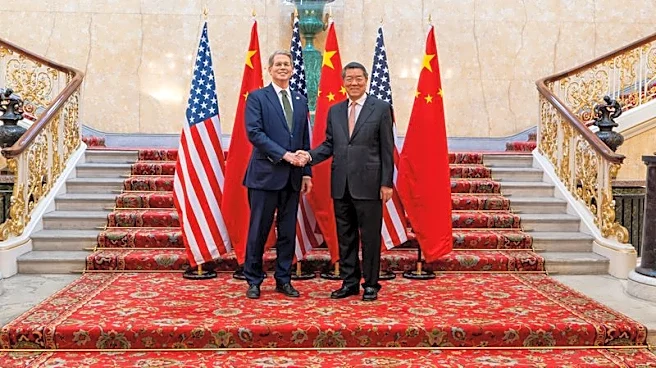
Representatives Sam Liccardo (D-Calif.) and Kevin Kiley (I-Calif.) have introduced a framework for the U.S. government and artificial intelligence experts to engage with their Chinese counterparts on AI technology. This proposal comes days before President
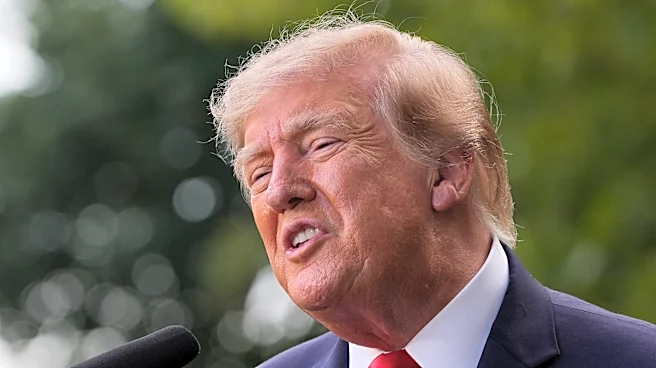
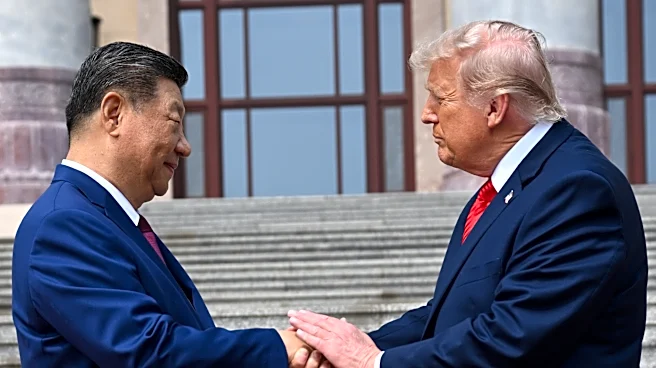
Trump is set to host Chinese President Xi Jinping for a summit, where discussions are expected to include the risks posed by advanced 'frontier' AI. The framework suggests directing the State Department to lead a cross-government team to negotiate with China. The goal is to identify shared priorities for mitigating AI safety and catastrophic risks, encompassing areas such as cybersecurity, loss-of-control scenarios, and potential nuclear and biological harms. The proposal also includes the establishment of a 'hotline' for direct communication between the two governments on AI risks and allows for direct engagement between AI industry and safety experts from universities, think tanks, and industry AI labs in both countries.
Why It's Important?
This proposed framework is significant as it addresses the growing international concern over the safety and potential catastrophic risks associated with advanced artificial intelligence. By advocating for direct engagement and negotiation with China, a major global player in AI development, the U.S. aims to establish common ground and mechanisms for risk mitigation. The focus on cybersecurity, loss-of-control, and nuclear/biological harms highlights the critical national security implications of unchecked AI development. The 'hotline' concept underscores the urgency of real-time communication in potential AI-related crises. Furthermore, enabling direct dialogue between AI experts from both nations could foster a shared understanding of technical challenges and potential solutions, moving beyond political rhetoric to practical cooperation. This initiative could set a precedent for international collaboration on emerging technologies with profound global impact.
What's Next?
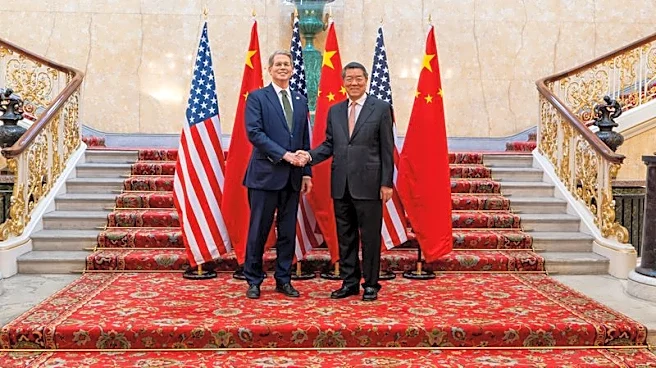
The proposed framework is being introduced just before President Trump's summit with Chinese President Xi Jinping, suggesting that AI risks will be a topic of discussion. Treasury Secretary Scott Bessent has already indicated that the U.S. has proposed a 'notification mechanism' for serious AI risks ahead of the summit. The next steps would likely involve the U.S. government, particularly the State Department, evaluating and potentially adopting elements of this framework as part of its diplomatic strategy with China on AI. The success of establishing a cross-government negotiating team and a 'hotline' would depend on the willingness of both the U.S. and Chinese administrations to commit to such a structured engagement. Additionally, the allowance for direct communication between AI industry and safety experts could lead to initial technical exchanges and collaborative research efforts, laying the groundwork for broader governmental agreements.
Beyond the Headlines
The initiative by Representatives Liccardo and Kiley delves into the complex ethical and geopolitical dimensions of artificial intelligence. Beyond immediate safety concerns, the framework implicitly acknowledges the dual-use nature of AI, where advancements can have both beneficial and destructive applications. By seeking 'shared priorities,' the proposal attempts to navigate the competitive landscape of AI development between the U.S. and China, aiming for cooperation in risk mitigation rather than solely focusing on technological supremacy. The emphasis on expert-level dialogue suggests a recognition that technical solutions and understanding are crucial for effective policy-making in this rapidly evolving field. This approach could foster a global norm of responsible AI development, potentially influencing future international treaties or agreements on AI governance and arms control, especially concerning autonomous weapons systems and cyber warfare capabilities.