




What's Happening?
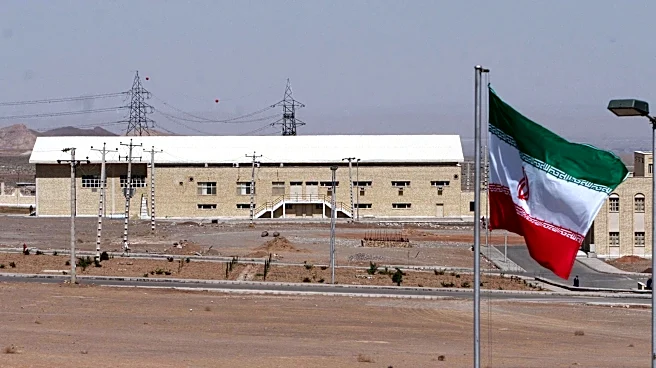
The U.S. Central Command (CENTCOM) has announced the formation of Task Force Iron Gate, a new initiative aimed at disrupting the flow of weapons, sanctioned materials, and illicit revenue into Iran. This task force, comprising approximately 20 personnel
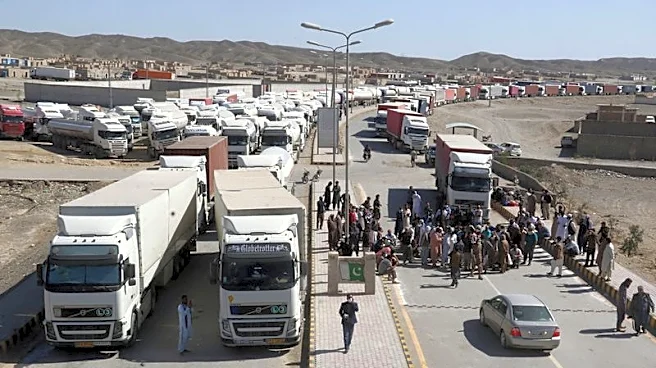
based at CENTCOM headquarters in Tampa, Florida, will focus on Iranian land borders and Caspian Sea shipping routes. The move comes as Iran reportedly seeks to rebuild its military capabilities following U.S. and Israeli attacks. Adm. Brad Cooper, commander of CENTCOM, stated that this task force will reinforce an "ironclad blockade against Iran at sea" and will collaborate with other federal agencies to prevent the transport of prohibited materials through alternative routes. Researchers from the Center for Strategic and International Studies (CSIS) have indicated that disruptions to traditional maritime supply routes could lead Iran to utilize commercial networks through Pakistan, Central Asia, and the Caspian Sea for its imports.
Why It's Important?
This development is significant because it represents an escalation in U.S. efforts to counter Iran's military ambitions and its ability to finance terrorism. By targeting land and Caspian Sea routes, the U.S. is attempting to close potential loopholes that Iran might exploit to circumvent existing maritime blockades. Iran relies heavily on imported machinery, electronics, and other materials for weapons manufacturing, and disrupting these supply chains could severely impede its military production capabilities. The CSIS report highlights that the Caspian Sea presents a particular challenge for American interdiction efforts due to its status as a closed sea governed by its littoral states, making it harder to disrupt shipments compared to the Persian Gulf where U.S. forces are concentrated. This initiative could impact regional stability and the broader geopolitical landscape by limiting Iran's influence and capacity for military action.
What's Next?
Task Force Iron Gate will begin its operations, working with various federal agencies to identify and interdict illicit shipments. While CENTCOM has not specified the exact methods the task force will employ or whether it will directly coordinate with governments along Iran's borders, the focus will be on curtailing Iran's ability to finance terrorism, rebuild weapons factories, and replenish its military. The effectiveness of this task force will depend on its ability to navigate the complexities of international borders and the unique challenges presented by the Caspian Sea. The international community will likely monitor the task force's actions and their impact on Iran's supply networks and regional stability. Potential reactions from Iran and its allies, as well as from countries whose territories might be used as transit routes, remain to be seen.
Beyond the Headlines
The establishment of Task Force Iron Gate underscores a broader strategic shift in U.S. policy towards Iran, moving beyond traditional maritime interdiction to encompass a more comprehensive approach that includes land and inland water routes. This expanded focus acknowledges the adaptability of illicit networks and the need for multi-faceted strategies to counter them. The involvement of other federal agencies suggests a whole-of-government approach, integrating intelligence, diplomatic, and economic tools alongside military efforts. This could set a precedent for how the U.S. addresses similar challenges in other regions, particularly concerning state and non-state actors involved in illicit arms trafficking. The long-term implications could include increased pressure on countries bordering Iran to cooperate with U.S. efforts, potentially leading to diplomatic tensions or new alliances in the region.