



What's Happening?
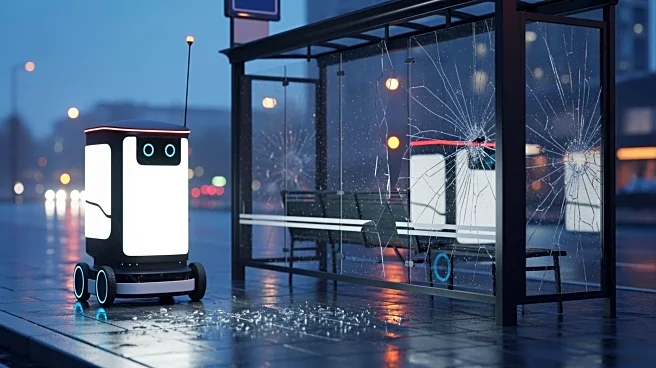
In Chicago, two incidents involving food delivery robots have resulted in damage to city bus shelters, prompting public debate about their presence on sidewalks. The first incident involved a Serve Robotics device crashing into a bus shelter in West Town,
while the second involved a Coco Robotics device at North Avenue and Larrabee Street. Both companies have acknowledged the incidents and are conducting investigations. The robots are part of a pilot program that allows them to operate on city sidewalks. The program is set to end in May 2027 unless extended by the City Council. The incidents have fueled criticism from local residents and officials, including Alderman Daniel La Spata, who questioned the safety and benefits of the robots.
Why It's Important?
The incidents highlight the challenges and potential risks associated with integrating autonomous delivery robots into urban environments. As cities explore innovative solutions for last-mile delivery, ensuring public safety and infrastructure integrity becomes crucial. The debate in Chicago reflects broader concerns about the impact of automation on public spaces and the need for regulatory frameworks to manage emerging technologies. The outcome of this pilot program could influence future policies on the use of autonomous delivery systems in urban areas, affecting businesses, city planning, and public safety.
What's Next?
The City of Chicago will continue to monitor the pilot program and assess the robots' impact on public infrastructure and safety. The findings from the ongoing investigations by Serve and Coco Robotics will be crucial in determining the program's future. City officials may consider revising regulations or implementing stricter safety measures for autonomous delivery systems. The pilot program's conclusion in 2027 will be a critical juncture for deciding whether to expand, modify, or terminate the use of delivery robots in the city.