
What's Happening?
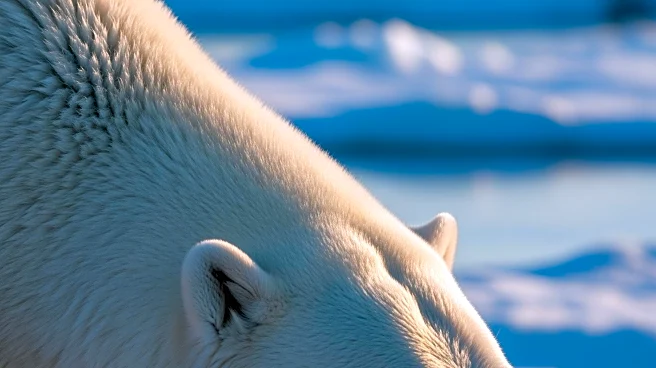
Polar bears are undergoing genetic changes as a response to the warming climate in the Arctic, according to new research from the University of East Anglia. The study, published in the journal Mobile DNA,
indicates that polar bears are adapting their DNA to cope with the loss of sea ice, which is crucial for their survival. This genetic adaptation is seen as a desperate survival mechanism as the bears face food scarcity due to reduced hunting grounds. The research highlights that different groups of polar bears are experiencing genetic changes at varying rates, influenced by their specific environments. The study provides a glimmer of hope for the species, which is expected to see a significant population decline by 2050.
Why It's Important?
The genetic adaptation of polar bears underscores the severe impact of climate change on wildlife. As the Arctic continues to warm, the survival of polar bears is increasingly threatened, with predictions of a two-thirds population decline by mid-century. This research highlights the urgent need for climate action to slow down global warming and provide more time for species to adapt. The findings also emphasize the interconnectedness of ecosystems and the potential cascading effects on biodiversity if key species like polar bears face extinction. The study serves as a call to action for reducing carbon emissions to mitigate further environmental damage.
What's Next?
The study suggests that while genetic adaptation offers some hope, it does not eliminate the risk of extinction for polar bears. Continued monitoring and research are essential to understand the long-term viability of these genetic changes. Conservation efforts must focus on reducing carbon emissions and protecting the Arctic habitat to support the survival of polar bears. The research also raises questions about the adaptability of other species facing similar environmental pressures, highlighting the need for comprehensive strategies to address climate change impacts on global biodiversity.