


What's Happening?
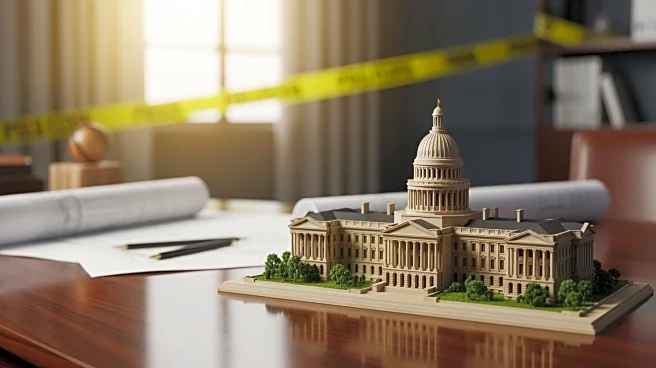
President Donald Trump is advancing his plans to renovate the White House, focusing on potential expansions to the West Wing. Following the demolition of the East Wing to construct a new ballroom in 2025, Trump is now considering adding a second level
to the colonnade connecting the West Wing to the executive residence. This proposal was presented at a National Capital Planning Commission meeting in Washington. The project, dubbed the 'Upper West Wing,' is still in the design phase and could serve as additional office space or future first ladies' offices. The renovations are funded by private donations, with costs rising from $200 million to $400 million. Architect Shalom Baranes emphasized the importance of restoring the White House's symmetry with this addition.
Why It's Important?
The proposed renovations reflect President Trump's ongoing efforts to leave a lasting architectural legacy at the White House. The expansion could enhance the functionality of the West Wing, providing more space for administrative operations. However, the project has faced criticism, particularly from the National Trust for Historic Preservation, which filed a lawsuit over the East Wing demolition, citing a lack of required federal review. The outcome of this legal challenge could influence future federal construction projects and the administration's compliance with historic preservation laws. The renovations also highlight the administration's reliance on private funding for public projects, raising questions about transparency and accountability.
What's Next?
The legal proceedings initiated by the National Trust for Historic Preservation are ongoing, with a federal judge expected to review the White House's compliance with federal oversight requirements. The administration must navigate these legal challenges while advancing the renovation plans. Public and political reactions to the project will likely continue, especially concerning the use of private donations and the impact on the historic integrity of the White House. The administration's ability to address these concerns will be crucial in determining the project's future.