






What's Happening?
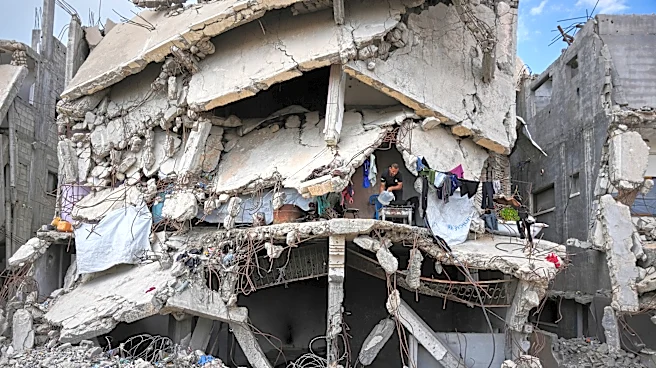
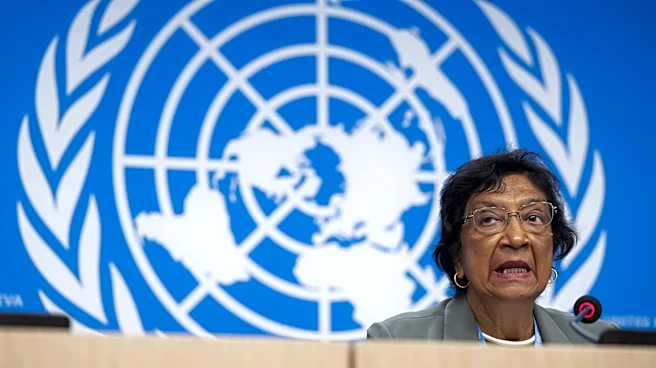
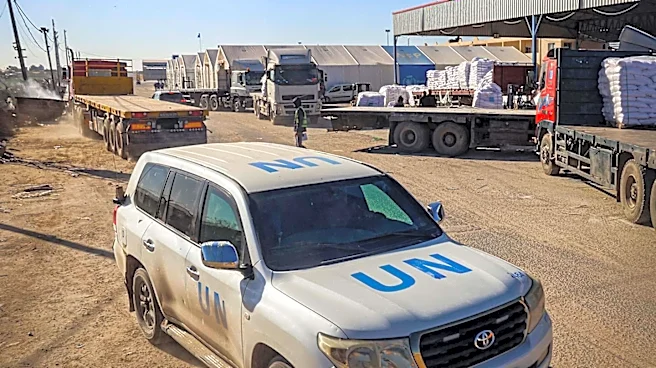
An organization supported by the United Nations has declared a "catastrophe scenario of famine" in Gaza, citing critical shortages of food, water, and medicine. The United Nations Office for the Coordination of Humanitarian Affairs (OCHA) has issued a warning
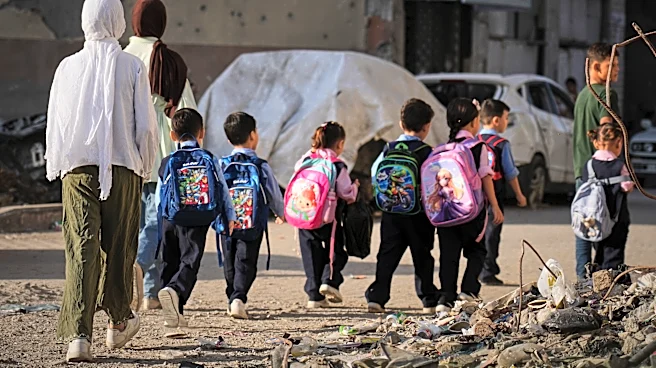
that food aid to the region is expected to decrease due to insufficient funding and ongoing restrictions on the delivery of essential supplies and equipment. Currently, at least 500,000 people in Gaza are facing famine conditions, and nearly the entire population is experiencing acute food shortages. This declaration underscores the dire humanitarian situation and the urgent need for increased aid and unimpeded access for humanitarian operations.
Why It's Important?
The declaration of a famine catastrophe in Gaza highlights a severe humanitarian crisis with profound implications for regional stability and international aid efforts. The widespread food insecurity, affecting nearly the entire population, indicates a systemic breakdown in access to basic necessities. This situation places immense pressure on international organizations and governments to address the crisis, potentially leading to increased diplomatic efforts and calls for humanitarian corridors. The reduction in food aid due to funding shortages and restrictions on supplies could exacerbate the crisis, leading to further loss of life and long-term health consequences for the affected population. The use of hunger as a weapon of war, as implied by the obstruction of humanitarian assistance, is a violation of international humanitarian law and could lead to calls for accountability from the international community.
What's Next?
In response to the escalating famine in Gaza, increased international pressure is anticipated on all parties involved to facilitate humanitarian access and ensure the delivery of essential aid. Diplomatic efforts are likely to intensify, aiming to secure sustained funding for relief operations and lift restrictions on supplies. Humanitarian organizations will continue to advocate for the protection of civilians and the upholding of international humanitarian law, potentially leading to calls for investigations into the obstruction of aid. The situation may also prompt discussions within the United Nations Security Council regarding further resolutions or actions to address the crisis. The long-term recovery and rebuilding efforts in Gaza will require significant international cooperation and investment, even after the immediate crisis subsides.
Beyond the Headlines
The famine in Gaza extends beyond immediate food shortages, revealing deeper ethical and legal implications concerning the conduct of conflict and the responsibilities of international actors. The deliberate deprivation of food and obstruction of humanitarian assistance, if proven, could constitute war crimes, raising questions about accountability and justice. This crisis also underscores the fragility of food systems in conflict zones and the devastating impact on civilian populations. The long-term consequences will include not only physical health issues but also profound psychological trauma, displacement, and the potential for increased radicalization due to desperation. The international community's response to this crisis will set a precedent for how similar situations are handled in the future, influencing the effectiveness of international humanitarian law and the protection of civilians in armed conflicts.