


What's Happening?
Isaiah Zagar, a celebrated mosaic artist from South Philadelphia, has passed away at the age of 86 due to complications from heart failure and Parkinson's disease. Zagar was known for his extensive work in transforming over 50,000 square feet of walls
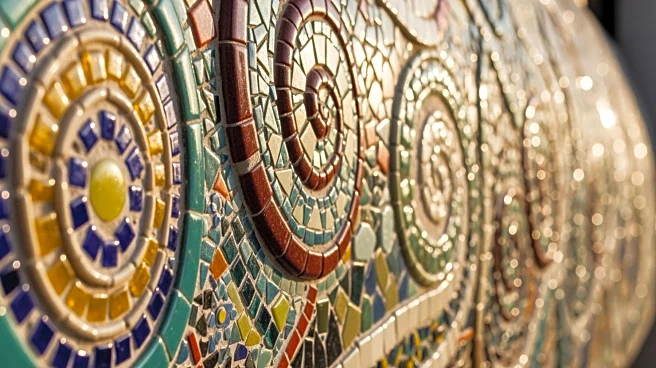
and buildings across Philadelphia with his unique mosaic art, including the famous Magic Gardens. His art, characterized by the use of broken bottles, handmade tiles, and mirrors, has become an integral part of Philadelphia's cultural identity. Zagar's work was not only a form of artistic expression but also a therapeutic practice for him, as he struggled with mental health issues throughout his life. His contributions to the city's visual landscape have been widely recognized, and his legacy is expected to endure through the many public spaces he transformed.
Why It's Important?
Isaiah Zagar's work has had a profound impact on the cultural and artistic landscape of Philadelphia. His mosaics have redefined public spaces, turning ordinary walls into vibrant works of art that attract both locals and tourists. This transformation has contributed to the revitalization of neighborhoods, particularly in South Philadelphia, and has played a role in the city's broader cultural renaissance. Zagar's approach to art, using found objects and emphasizing the beauty in what might otherwise be considered trash, challenges traditional notions of art and encourages a more inclusive and accessible view of artistic expression. His legacy continues to inspire artists and community members, highlighting the importance of public art in fostering community identity and pride.
What's Next?
Philadelphia's Magic Gardens, a nonprofit organization dedicated to preserving Zagar's work, will continue to maintain and promote his mosaics. The organization plans to announce a public memorial to honor Zagar's contributions to the city. Additionally, Zagar's body will be donated to the Parkinson's Disease and Movement Disorders Center at Johns Hopkins University to support medical research. The preservation of his work, particularly in the face of new developments that threaten some of his murals, remains a priority for the community and the Magic Gardens team.