





What's Happening?
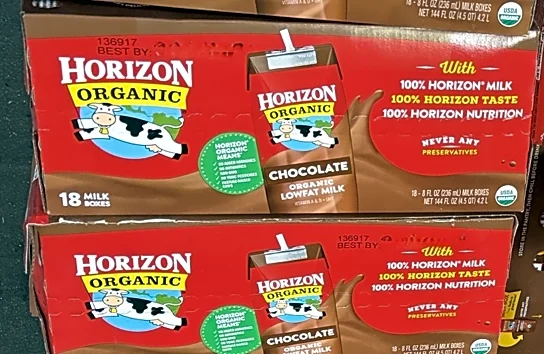
Horizon Organic has issued a voluntary nationwide recall for over 50,000 cases of its 1% Chocolate Milk, distributed in 12- and 18-packs of shelf-stable, eight-ounce cartons. The recall was prompted by numerous consumer complaints regarding products with
an unpleasant smell, taste, and texture, with some cartons appearing bloated. The company stated that the milk could be subject to 'premature spoilage.' The affected products have specific 'Best By' dates ranging from January 30, 2027, to February 3, 2027, and corresponding UPC codes. An enforcement report from the Food and Drug Administration (FDA) has also been issued, confirming the potential for spoilage. Horizon Organic has initiated an investigation into the cause of the issue.
Why It's Important?
This recall is significant because it impacts a widely distributed product from a popular organic brand, potentially affecting a large number of consumers across the U.S. While the recall is due to spoilage rather than contamination with harmful substances, it can still lead to consumer dissatisfaction, financial losses for the company, and a potential erosion of trust in organic products. The issue of 'premature spoilage' suggests a problem in the manufacturing, packaging, or storage process, which could have broader implications for quality control within the food industry. For consumers, it highlights the importance of checking product dates and being aware of sensory indicators of spoilage, even in shelf-stable items. The investigation into the cause will be crucial for identifying systemic issues and preventing future occurrences, thereby maintaining consumer confidence in product quality and safety.
What's Next?
Horizon Organic has advised consumers who purchased the recalled 1% Chocolate Milk to immediately dispose of the product. Customers are encouraged to retain proof of purchase and contact Horizon for information regarding refunds. The company's ongoing investigation aims to pinpoint the exact cause of the premature spoilage, which could lead to adjustments in their production, packaging, or distribution processes. The FDA will likely monitor Horizon's corrective actions to ensure compliance with food safety standards. This incident may also prompt other manufacturers of shelf-stable dairy products to review their quality control measures to prevent similar issues and maintain product integrity.
Beyond the Headlines
The Horizon Organic recall, while seemingly minor compared to recalls involving toxic substances, touches upon deeper aspects of consumer expectations for organic and shelf-stable products. Consumers often associate organic brands with higher quality and natural processes, and a spoilage issue can challenge this perception. For shelf-stable products, the expectation of a long, uncompromised shelf life is paramount, and premature spoilage can lead to significant inconvenience and waste. This event could also spark discussions about the environmental impact of food waste resulting from recalls and the need for more robust quality assurance throughout the supply chain, particularly for products designed for extended storage. It underscores the continuous challenge for food manufacturers to balance large-scale production with consistent quality and consumer trust.