




What's Happening?
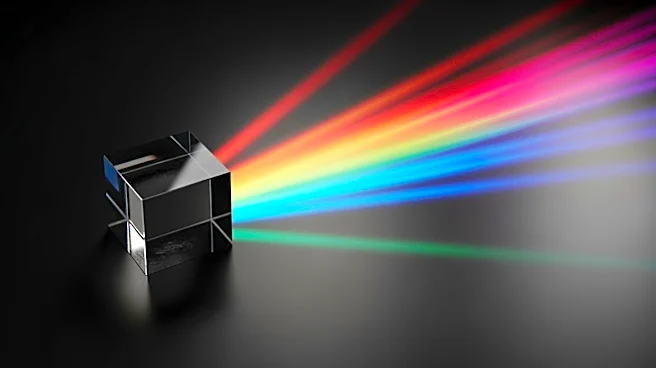
The electromagnetic spectrum has been pivotal in expanding our understanding of the universe, revealing phenomena beyond the visible light spectrum. From Isaac Newton's discovery of the spectrum of colors to the identification of radio waves, microwaves,
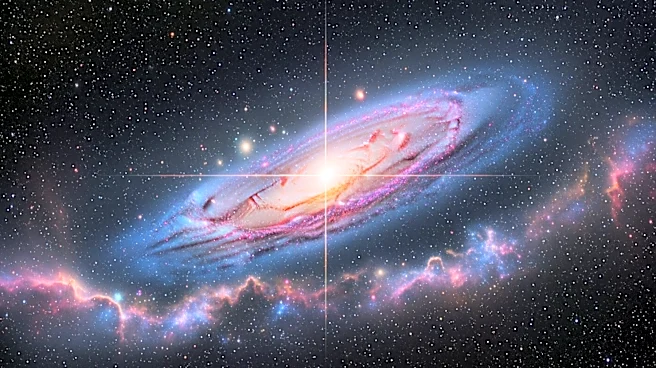
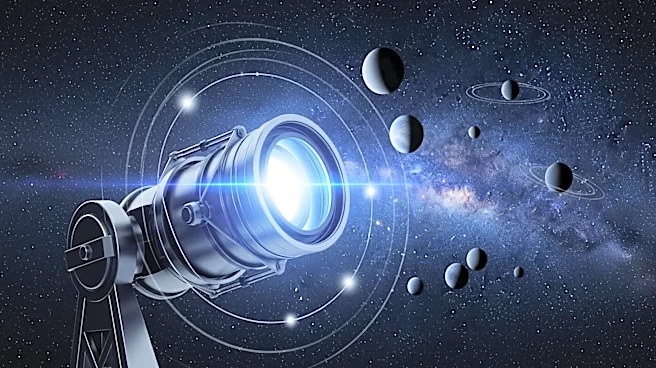
X-rays, and gamma rays, the spectrum has allowed scientists to explore the cosmos in unprecedented ways. Modern telescopes, like the James Webb Space Telescope, utilize the spectrum to capture images of distant galaxies, providing insights into their formation and evolution. This comprehensive view of the universe has been instrumental in advancing our knowledge of celestial bodies and the conditions of the early universe.
Why It's Important?
The electromagnetic spectrum is essential for astronomical research, enabling scientists to observe and analyze phenomena that are invisible to the naked eye. By using different wavelengths, researchers can study various aspects of the universe, from the composition of distant galaxies to the potential for extraterrestrial life. This capability enhances our understanding of the universe's history and structure, offering clues about the origins of stars and galaxies. The spectrum's role in astronomy underscores the importance of technological advancements in expanding our cosmic knowledge and exploring the potential for life beyond Earth.