
What's Happening?
The European Commission has approved a €3 billion (approximately $3.55 billion) aid scheme proposed by the German government to support clean energy manufacturing. This initiative is part of the EU's broader
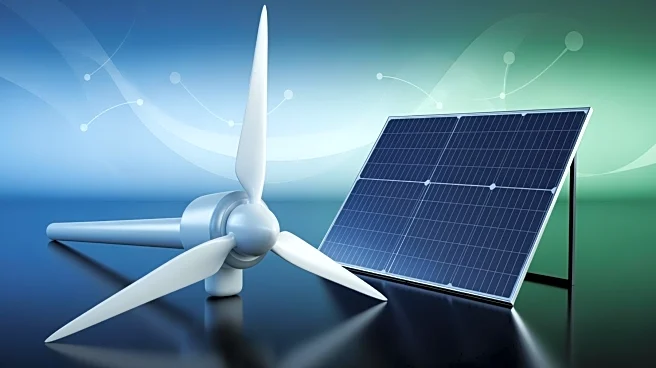
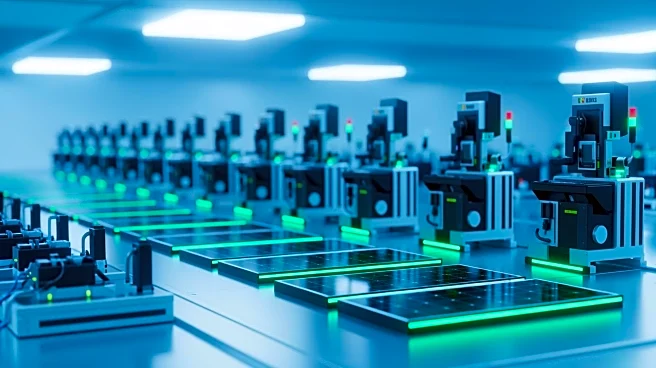
strategy to enhance clean technology production under the Net Zero Industry Act. The scheme aims to bolster manufacturing capacity across the solar supply chain, including components like solar panels, batteries, and electrolysers. The aid will be distributed in the form of grants, tax advantages, and interest subsidies for new loans, and is available to companies throughout Germany until the end of 2030. This move aligns with the Clean Industrial Deal, which seeks to inject €100 billion into clean energy manufacturing across Europe.
Why It's Important?
This approval is significant as it underscores the EU's commitment to expanding its clean energy sector, which is crucial for meeting climate goals and reducing reliance on fossil fuels. By supporting Germany's manufacturing capabilities, the EU aims to enhance its competitive edge in the global clean tech market. The scheme is expected to stimulate economic growth, create jobs, and drive innovation in the renewable energy sector. It also reflects a strategic shift towards sustainable industrial practices, which could influence policy and investment decisions across the EU and beyond.
What's Next?
The aid scheme will be open for applications until 2030, allowing German companies to plan and execute long-term investments in clean technology. The EU's continued support for such initiatives may encourage other member states to propose similar schemes, fostering a collaborative approach to achieving net-zero emissions. Additionally, the success of this scheme could lead to further policy developments aimed at enhancing the EU's clean energy infrastructure and reducing carbon footprints.