
What's Happening?
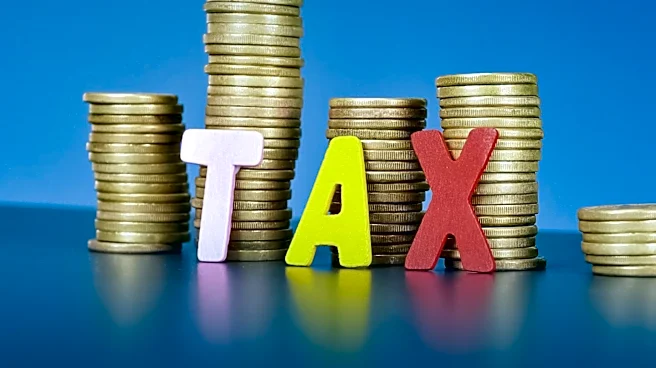
Texas Comptroller Don Huffines announced the distribution of $1.4 billion in net local sales tax revenue to Texas cities, counties, transit systems, and special purpose districts in October 2026. This
figure represents a 14.6% increase compared to October 2025. The state's total net sales tax revenue for October 2026, combining state and local collections, reached $6.15 billion, an 11.9% rise from the previous year. These collections primarily reflect sales made by businesses in September. Comptroller Huffines highlighted the thriving Texas economy and urged the Texas Legislature to utilize these increased revenues to reduce property taxes for Texans, aiming to make housing more affordable. Cities received $902.7 million, transit systems $301.1 million, counties $88.3 million, and special purpose districts $153.2 million, all showing significant year-over-year increases in allocations.
Why It's Important?
The substantial increase in local sales tax revenue in Texas has significant implications for local governance and the state's economy. For cities, counties, and other local entities, this influx of funds provides greater financial flexibility, potentially reducing the reliance on property taxes. Comptroller Huffines's call for the Texas Legislature to use these revenues for property tax reduction underscores a key policy debate in the state, where high property taxes are a concern for many homeowners. If adopted, such a measure could directly impact the affordability of housing and the cost of living for residents across Texas. The continued growth in sales tax revenue also signals a robust economic environment, which can attract businesses and residents, further stimulating economic activity and potentially leading to more job creation and investment within the state.
What's Next?
The immediate next step involves the Texas Legislature considering Comptroller Huffines's recommendation to use the increased sales tax revenues to reduce property taxes. This will likely become a central topic in upcoming legislative sessions, with various stakeholders, including local governments, homeowner associations, and business groups, weighing in on the proposal. The ongoing economic performance of Texas will also be closely monitored, as sustained growth in sales tax collections could provide further impetus for such policy changes. Additionally, local governments will need to decide how to best allocate their increased funds, whether through direct property tax relief, investment in public services, or other initiatives, which could vary significantly across different jurisdictions.
Beyond the Headlines
The discussion around using sales tax revenue to offset property taxes touches upon a broader philosophical debate regarding taxation and economic equity. While property tax reductions could alleviate financial burdens for homeowners, the reliance on sales tax, which can be regressive, might shift the tax burden to consumers. This development could also influence future urban planning and development, as more affordable housing could lead to demographic shifts and changes in local economies. Furthermore, the Comptroller's emphasis on a 'thriving Texas economy' highlights the state's unique economic model and its ability to generate substantial revenue, potentially setting a precedent or offering lessons for other states grappling with similar fiscal challenges and property tax concerns.