



What's Happening?
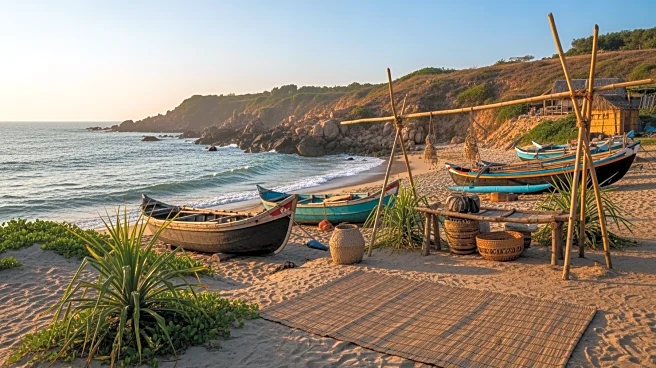
Molokai, often referred to as Hawaii's 'least touristy' island, hosted approximately 30,000 visitors in 2024, a small fraction compared to the millions visiting other Hawaiian islands. The island, home to about 7,400 residents, is characterized by its
dedication to agriculture, cultural preservation, and rural landscapes. It lacks large-scale tourist infrastructure, such as big-box resorts and nightlife, and has no permanent traffic lights. Historically, the community has resisted large-scale tourism to maintain its slower pace of life. Access to Molokai is limited to small commuter planes after the discontinuation of ferry services in 2016 due to competition and declining ridership.
Why It's Important?
Molokai's approach to tourism highlights a significant cultural and economic choice, prioritizing community values and environmental preservation over mass tourism. This model contrasts with the more commercialized tourism strategies of other Hawaiian islands, offering a unique case study in sustainable tourism. The island's resistance to large-scale tourism helps preserve its cultural heritage and natural environment, potentially serving as a model for other regions facing similar pressures. However, this approach also limits economic opportunities that tourism can bring, posing challenges for local economic development.