






What's Happening?
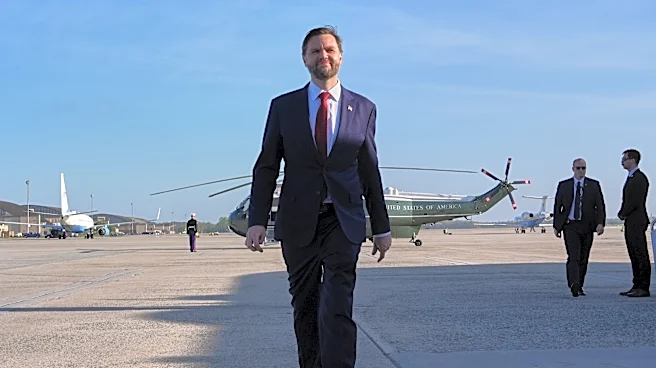
Recent peace talks between the United States and Iran have ended without reaching an agreement, according to officials. The negotiations, which took place in Islamabad, involved U.S. Vice President JD Vance and Iranian and Pakistani negotiators. Despite
21 hours of marathon face-to-face discussions, the parties were unable to come to a consensus. The talks were aimed at addressing longstanding issues between the U.S. and Iran, but the failure to reach a deal highlights ongoing diplomatic challenges. The breakdown in negotiations underscores the complexities of international diplomacy and the difficulties in resolving conflicts that have persisted for years.
Why It's Important?
The collapse of the U.S.-Iran peace talks is significant as it impacts diplomatic relations between the two nations. The inability to reach an agreement may lead to increased tensions and uncertainty in the region. For the U.S., this development could affect foreign policy strategies and influence its approach to Middle Eastern affairs. The lack of progress in negotiations may also have implications for global security, as unresolved issues between the U.S. and Iran can contribute to instability. Stakeholders, including political leaders and international organizations, may need to reassess their strategies in dealing with the diplomatic impasse.
What's Next?
Following the unsuccessful talks, it is likely that both the U.S. and Iran will explore alternative diplomatic channels or strategies to address their differences. Political leaders may engage in further discussions or seek mediation from international bodies to facilitate future negotiations. The situation may also prompt other countries to become involved in efforts to broker peace. Observers will be watching closely for any signs of renewed dialogue or shifts in policy that could lead to a breakthrough in relations.
Beyond the Headlines
The breakdown of these peace talks may have deeper implications for international diplomacy. It highlights the challenges of negotiating with countries that have complex historical and political relationships. The failure to reach an agreement could lead to increased scrutiny of diplomatic strategies and the effectiveness of current approaches to conflict resolution. Additionally, it may prompt discussions on the role of third-party mediators in facilitating successful negotiations.