




What's Happening?
The U.S. Environmental Protection Agency (EPA) has granted a $109 million Water Infrastructure Finance and Innovation Act (WIFIA) loan to the Honolulu Board of Water Supply. This funding is designated for the construction of the Kalaeloa Seawater Desalination
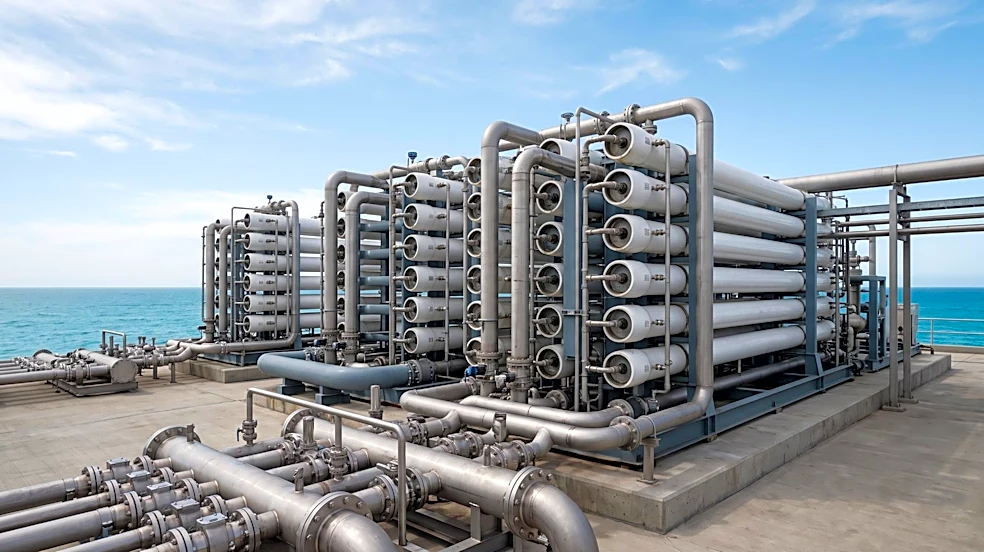
Facility Project on Oahu, Hawaii. This facility is projected to produce 1.7 million gallons of drinking water daily, offering a new water source for central Oahu and decreasing the region's dependence on existing groundwater aquifers. The project encompasses the construction of a reverse osmosis desalination plant, infrastructure for byproduct disposal, a recycled water pipeline, and transmission lines. This initiative aims to bolster water reliability in the more arid areas west of Honolulu and Pearl Harbor. According to Ernest Lau, manager and chief engineer of the Honolulu Board of Water Supply, this will be the island's first seawater desalination facility.
Why It's Important?
This EPA loan is crucial for addressing water scarcity and ensuring long-term water security in Oahu, Hawaii. By providing an alternative drinking water supply, the project reduces the strain on finite groundwater resources, which are susceptible to depletion and saltwater intrusion. The WIFIA program's long-term, low-cost financing mechanism makes such large-scale infrastructure projects more feasible for local utilities, ultimately benefiting ratepayers by deferring principal payments during construction. This investment in desalination technology highlights a growing trend in regions facing water stress, offering a sustainable solution to meet increasing demand. The project's success could serve as a model for other U.S. coastal communities grappling with similar water supply challenges, particularly in areas experiencing population growth and climate change impacts.
What's Next?
Construction of the Kalaeloa Seawater Desalination Facility Project will proceed with the support of the EPA's WIFIA loan. The Honolulu Board of Water Supply plans to defer principal payments during the construction phase to mitigate immediate financial impacts on ratepayers. The EPA's WIFIA program continues to make significant funding available, with $11 billion for water systems and an additional $3 billion for state infrastructure financing authorities, indicating a continued federal commitment to water infrastructure development. Future developments will likely involve the monitoring of the plant's construction progress, its operational efficiency, and its impact on local water resources and the environment. The successful implementation of this project could pave the way for further investments in desalination and other advanced water treatment technologies across the U.S.
Beyond the Headlines
The development of Hawaii's first seawater desalination plant underscores a broader national and global shift towards diversifying water sources in response to climate change and increasing demand. While desalination offers a viable solution for water-stressed coastal areas, it also raises environmental considerations, such as energy consumption and the disposal of brine. The project's design, including byproduct disposal infrastructure and recycled water pipelines, suggests an integrated approach to mitigate these impacts. This initiative also highlights the critical role of federal financing programs like WIFIA in enabling states and municipalities to undertake essential, yet costly, water infrastructure projects. The long-term implications extend to public health, economic stability, and environmental sustainability, as reliable access to clean water is fundamental to all these aspects.