





What's Happening?
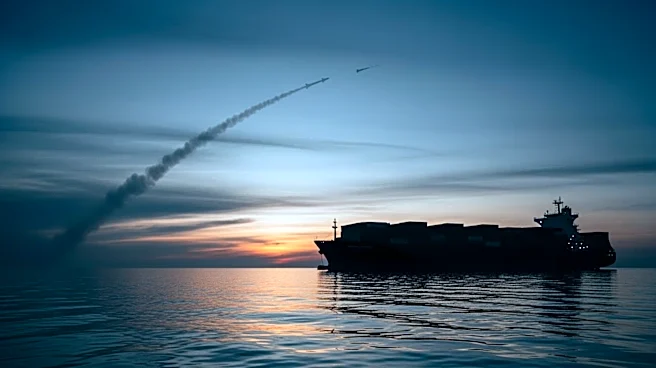
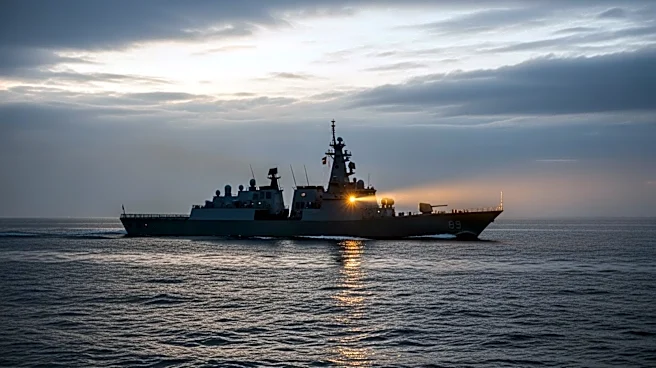
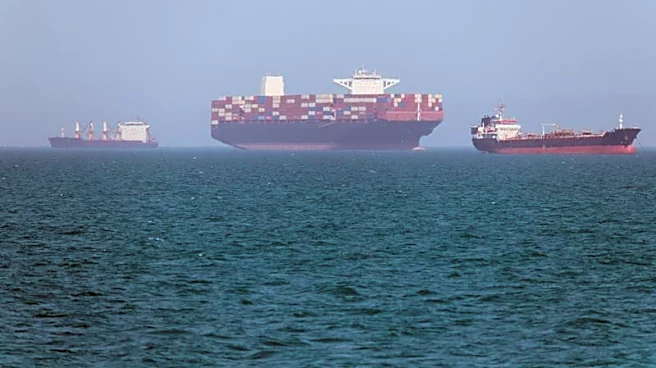
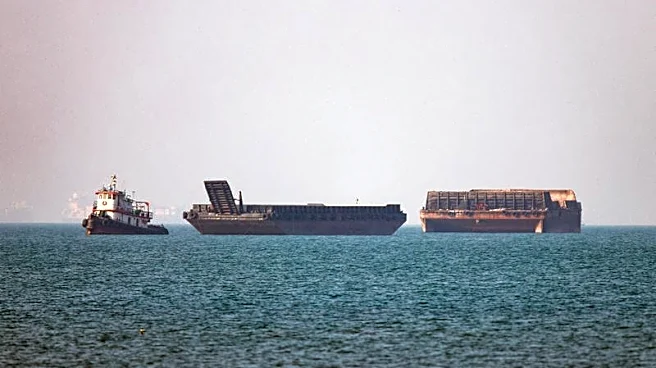
Iranian forces reportedly fired at U.S. Navy vessels attempting to navigate the Strait of Hormuz, following President Trump's initiative to free trapped ships in the region. The U.S. Central Command (Centcom) denied any damage to American vessels, asserting
that no U.S. Navy ships were struck. This incident comes as part of Trump's 'Project Freedom,' aimed at guiding ships through the closed strait, which is a critical passageway for global oil supply. Iran has demanded the U.S. end its naval blockade on Iranian ports and delay nuclear capability talks before engaging in negotiations. Tehran maintains control over the strait, with Major General Ali Abdollahi warning that any foreign military forces, particularly the U.S., would be attacked if they attempted to enter the strait.
Why It's Important?
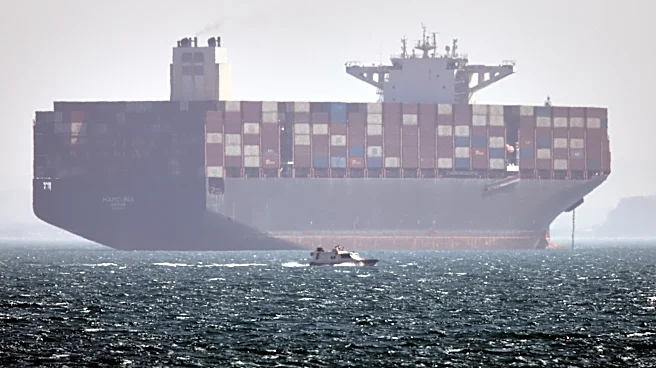
The Strait of Hormuz is a strategic chokepoint through which a significant portion of the world's oil supply passes. The closure of this passageway has led to a global oil and gas crisis, with soaring prices affecting economies worldwide. The U.S. initiative to reopen the strait is seen as a humanitarian gesture but also as a strategic move to alleviate the economic impact. However, Iran's firm stance on maintaining control over the strait and its aggressive response to U.S. actions highlight the potential for escalating military conflict. This situation poses a risk to global energy markets and could lead to broader geopolitical tensions.
What's Next?
The ongoing standoff in the Strait of Hormuz is likely to continue as both the U.S. and Iran hold firm on their positions. The U.S. may increase its naval presence in the region to ensure the safe passage of commercial vessels, while Iran may continue to assert its control over the strait. Diplomatic efforts to resolve the conflict could be complicated by Iran's demands and the U.S.'s strategic interests. The international community, particularly countries reliant on oil from the region, will be closely monitoring the situation for any developments that could impact global energy supplies.