









What's Happening?
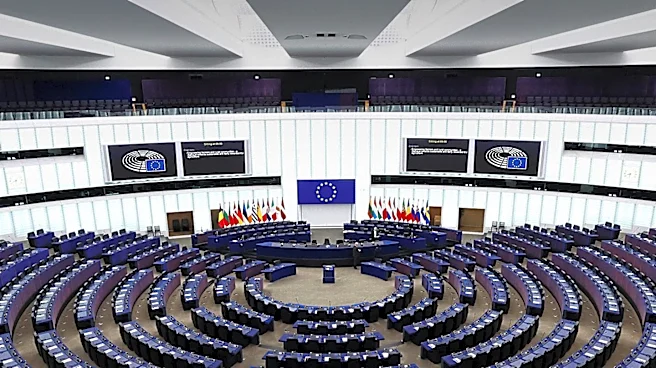
The European Parliament has urged the European Union to consider deploying a naval operation in the Black Sea. This call comes in response to recent attacks on civilian merchant vessels and repeated violations of Romanian airspace, for which the Parliament holds
Russia accountable. Members of the European Parliament (MEPs) also advocated for increased support for Romania and and Bulgaria to detect hostile drones and safeguard maritime transport and critical infrastructure. A resolution supporting these measures was adopted with 432 votes in favor, 52 against, and 88 abstentions. The resolution highlights a pattern of Russian escalation targeting civilian shipping and emphasizes Russia's role in deteriorating the Black Sea region's security. MEPs stressed the importance of ensuring freedom of navigation and maritime security to protect NATO’s eastern flank and the security of the Black Sea region and the Danube delta. They also urged NATO to explore a Black Sea initiative, building on discussions for a 'Black Sea Sentry,' and emphasized enhanced regional cooperation among Bulgaria, Romania, and Turkey.
Why It's Important?
This development is important as it signals a potential escalation in the EU's response to Russian aggression in the Black Sea, a critical geopolitical area. The proposed naval operation and increased support for Romania and Bulgaria could enhance maritime security, protecting vital shipping lanes and infrastructure. This directly impacts international trade and energy supplies, as disruptions in the Black Sea can have ripple effects on global markets. The call for NATO to explore a 'Black Sea Sentry' initiative underscores the strategic importance of the region for collective defense and could lead to a more robust military presence. For the U.S., this could mean increased engagement with European allies in the region, potentially through NATO, to counter Russian influence and ensure stability. The emphasis on protecting NATO's eastern flank also highlights the ongoing security concerns for member states bordering Russia and Ukraine, reinforcing the need for a unified defense strategy.
What's Next?
The European Parliament's resolution will now push the European Union and its member states to formally consider the deployment of a naval operation in the Black Sea. This will likely involve diplomatic discussions within the EU and with NATO allies to determine the feasibility, scope, and logistics of such an operation. Increased financial and technical support for Romania and Bulgaria to enhance drone detection and maritime security is also expected to be a priority. MEPs have called for allocating unspent EU funds from the SAFE instrument to assist these countries and for the forthcoming EU long-term budget to address security and defense requirements in the Black Sea region. Furthermore, discussions within NATO regarding a 'Black Sea Sentry' initiative are anticipated to gain momentum, potentially leading to new defense strategies and cooperative efforts among member states.
Beyond the Headlines
The European Parliament's call for a naval operation in the Black Sea extends beyond immediate security concerns, touching upon broader implications for international law and regional stability. The condemnation of Russia's actions as systematic targeting of civilian shipping raises questions about accountability and the protection of international maritime norms. This move could set a precedent for how international bodies respond to similar acts of aggression in other critical waterways. Ethically, it underscores the responsibility of international organizations to protect civilian lives and infrastructure amidst conflict. Culturally, it reinforces the narrative of a united European front against perceived threats, potentially influencing public opinion and political discourse within member states. Long-term, a sustained naval presence could reshape geopolitical dynamics in the Black Sea, impacting trade routes, energy security, and the balance of power between Russia and the West.