



What's Happening?
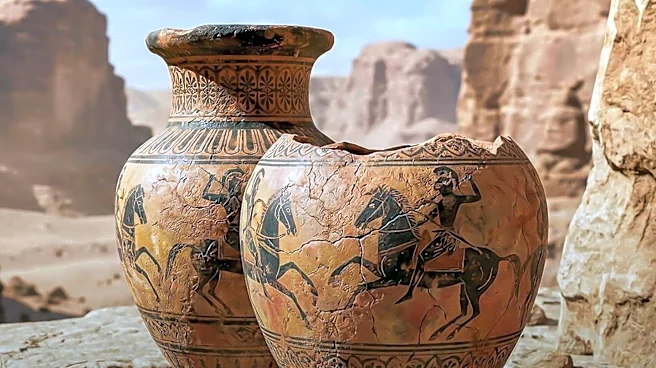
The Royal Commission for AlUla (RCU) has launched an exhibition featuring archaeological artifacts from its extensive collections. This initiative aims to highlight AlUla’s rich history and cultural heritage, showcasing a diverse range of items including
stone tools, inscriptions, coins, pottery, jewelry, books, and historical photographs. The exhibition underscores the RCU's significant investment in transforming AlUla, located in northwestern Saudi Arabia, into a premier cultural and tourism destination. This effort is part of Saudi Arabia's broader Vision 2030 economic diversification program, championed by Crown Prince Mohammed bin Salman, which directs substantial state resources toward arts, heritage preservation, and the creative economy. The RCU's work extends beyond conservation to include contemporary arts programs, such as the annual Desert X AlUla exhibition, attracting international attention and prominent artists.
Why It's Important?
This cultural initiative is important as it positions Saudi Arabia as a steward of human civilization, moving beyond a singular religious tradition to embrace a heritage that predates Islam. By investing heavily in archaeological preservation and cultural programming, the RCU is contributing to the Kingdom's economic diversification goals under Vision 2030. The development of AlUla as an international cultural and tourism hub is expected to attract global visitors, fostering economic growth and creating new opportunities within the creative industries. This strategic focus on culture also serves as a form of soft power, shaping international perceptions of Saudi Arabia and highlighting its historical depth and commitment to preserving global heritage. The involvement of scholars, conservators, curators, and educators in these projects ensures durable outcomes that will outlast any particular political moment.
What's Next?
The Royal Commission for AlUla is expected to continue its extensive work in archaeological excavation, conservation, and cultural programming. Future initiatives will likely include further exhibitions, international collaborations, and the ongoing development of infrastructure to support tourism in the region. The success of these efforts will be crucial for Saudi Arabia's Vision 2030, as it seeks to diversify its economy away from oil and establish itself as a global cultural and tourism leader. The continued promotion of sites like Hegra, a UNESCO World Heritage Site, will draw more international visitors, further integrating AlUla into the global cultural landscape and contributing to the Kingdom's long-term economic and cultural objectives.
Beyond the Headlines
The emphasis on AlUla's pre-Islamic heritage represents a significant cultural and ideological shift within Saudi Arabia. By showcasing ancient civilizations and diverse historical layers, the Kingdom is subtly redefining its national identity and presenting a more inclusive narrative of its past. This move has broader implications for regional cultural diplomacy, as it seeks to foster cross-cultural understanding and attract a wider international audience. The investment in cultural infrastructure and the arts also reflects a growing recognition of culture as a vital component of national development and international standing, signaling a long-term commitment to fostering a vibrant creative economy and preserving shared human heritage.