
What's Happening?
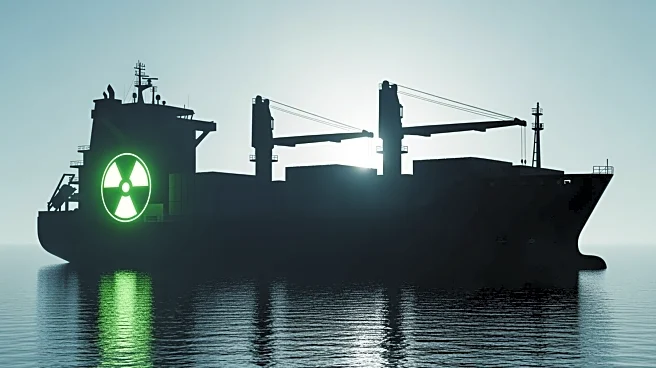
A UK-led maritime consortium, including Lloyd’s Register, Rolls-Royce, and Babcock International Group, is spearheading efforts to develop international standards for nuclear-powered commercial ships.
The initiative aims to decarbonize global shipping by utilizing advanced modular reactors that allow ships to operate for years without refueling, thus producing no carbon dioxide emissions. The consortium's initial program focuses on demonstrating design acceptability, developing certification frameworks, and establishing insurability pathways. The goal is to position the UK as a leader in shaping new regulatory, safety, and insurance frameworks for maritime nuclear power.
Why It's Important?
The development of nuclear-powered shipping standards is significant as it addresses the urgent need to reduce carbon emissions in the maritime industry, a major contributor to global pollution. By enabling ships to maintain full design speed without refueling, the initiative could revolutionize commercial shipping, making it more sustainable. The UK stands to gain economically by leading this transition, potentially creating jobs in shipyards and boosting business in the City. As other countries develop their own approaches, the UK's leadership in setting standards could influence global maritime practices.
What's Next?
The consortium will continue to work on integrating nuclear and maritime regulations, defining security requirements, and publishing guidance to accelerate adoption. As the technology is adapted for commercial use, new regulatory, safety, and insurance frameworks will be necessary. The UK aims to shape these standards, ensuring its leadership in the field. The success of this initiative could prompt other countries to follow suit, leading to a broader adoption of nuclear-powered shipping worldwide.