
What's Happening?
BIMCO, a leading international shipping association, has issued a warning regarding a potential scam involving parties posing as Iranian authorities demanding tolls from ships transiting the Strait of
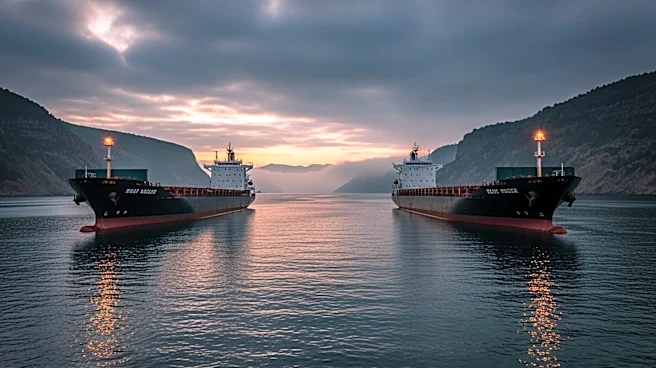
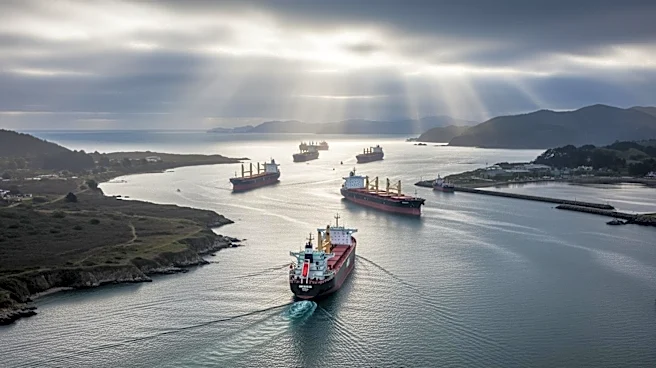
Hormuz. Jakob Larsen, BIMCO's Chief Safety & Security Officer, highlighted the complexity and volatility of the current security situation, noting that ships have been attacked following supposed Iranian approval to transit. The Strait of Hormuz, a critical chokepoint for global oil shipments, is currently under a blockade by Iran against ships perceived as hostile. Meanwhile, the United States is enforcing its own blockade against ships traveling to and from Iranian ports, with naval assets positioned in the Gulf of Oman. Both nations have detained and attacked ships, escalating tensions in the region. BIMCO emphasizes the need for restraint from all parties to protect innocent seafarers and calls for a stable ceasefire and assurances for safe passage through the strait.
Why It's Important?
The situation in the Strait of Hormuz is of significant concern to the global shipping industry and international trade. The strait is a vital passage for oil and gas shipments, and disruptions can have far-reaching economic impacts. The potential scam adds another layer of complexity, as shipping companies must navigate not only geopolitical tensions but also fraudulent activities. The ongoing blockades and military actions by both Iran and the United States increase the risk of conflict, which could further destabilize the region and impact global energy markets. Shipping companies face increased operational risks and costs, and the safety of seafarers is a critical concern. The need for a diplomatic resolution is urgent to prevent further escalation and ensure the security of maritime routes.
What's Next?
To resume normal shipping operations, a stable ceasefire and clear assurances from both Iran and the United States are necessary. The threat of mines in the Strait of Hormuz, as indicated by Iranian actions, requires a comprehensive mine clearance effort, which could take several weeks. Until then, shipping routes will be limited to areas near Iran and Oman, which cannot accommodate the usual volume of traffic. The international community, including maritime organizations and governments, may need to engage in diplomatic efforts to de-escalate tensions and facilitate safe passage for commercial vessels. The situation remains fluid, and stakeholders will be closely monitoring developments.
Beyond the Headlines
The ongoing tensions in the Strait of Hormuz highlight broader geopolitical dynamics in the Middle East, where regional power struggles and international interests intersect. The use of maritime blockades and the targeting of commercial vessels as leverage in political conflicts raises ethical and legal questions about the protection of civilian maritime operations. The potential for environmental damage from military actions and the laying of mines also poses long-term risks to the marine ecosystem. The situation underscores the importance of international maritime law and the need for cooperative security arrangements to ensure the free and safe movement of goods across critical global shipping lanes.