

What's Happening?
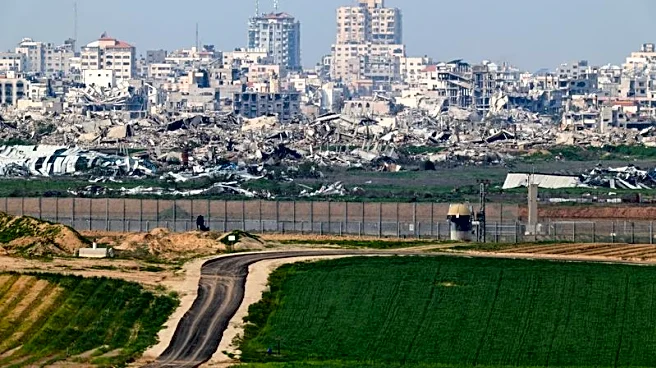
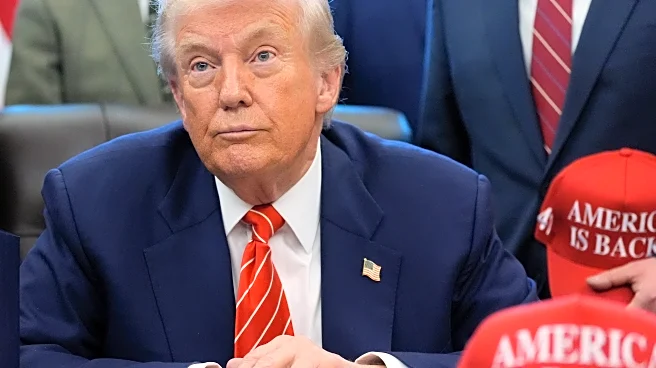
President Trump has extended invitations to several countries to join a newly established Board of Peace, aimed at overseeing developments in Gaza. This initiative requires a $1 billion contribution for permanent membership, while a three-year term does
not require a financial commitment. The funds are intended for the reconstruction of Gaza. Countries such as Hungary and Vietnam have accepted the invitation, while others like India and Australia are considering it. The board's creation follows a U.S.-endorsed ceasefire plan in Gaza, which includes disarmament of Hamas and the deployment of an international security force. The board could potentially rival the U.N. Security Council, which has faced challenges due to U.S. vetoes and funding cuts.
Why It's Important?
The establishment of the Board of Peace signifies a significant shift in international diplomacy, potentially challenging the authority of the U.N. Security Council. By requiring substantial financial contributions, the board could influence global power dynamics, particularly in the Middle East. The initiative reflects President Trump's broader foreign policy strategy, emphasizing direct financial investment in conflict resolution. This move could impact U.S. relations with countries involved, as well as with Israel, which has expressed concerns over the board's executive committee. The board's success or failure could have lasting implications for peace efforts in Gaza and the broader region.
What's Next?
The U.S. is expected to announce the official list of board members during the World Economic Forum in Davos. The board will oversee the next phases of the Gaza ceasefire, including the establishment of a new Palestinian committee and the disarmament of Hamas. Reactions from international stakeholders, particularly those with vested interests in the region, will be crucial in determining the board's effectiveness. The involvement of countries like Turkey, which has complex relations with both Israel and Hamas, could play a pivotal role in the board's operations and its ability to achieve its objectives.