
What's Happening?
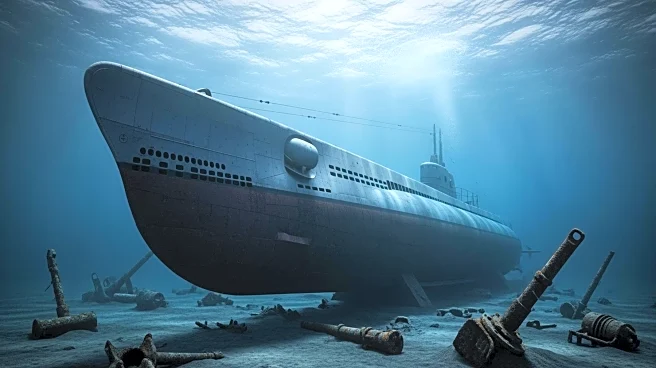
On December 7, 1941, the Japanese submarine HA-19 was part of a fleet of midget submarines intended to attack Pearl Harbor. However, HA-19 faced significant challenges, including a malfunctioning gyrocompass
and difficulties navigating the rocky and coral-laden waters outside the harbor. The submarine, manned by Ensign Kazuo Sakamaki and Chief Warrant Officer Kiyoshi Inagaki, became stuck and was spotted by the USS Helm, which opened fire. The crew attempted to enter the harbor multiple times, but the submarine sustained damage that rendered its torpedoes inoperable. Eventually, toxic fumes from seawater entering the submarine forced the crew to abandon ship. Sakamaki survived and became the first Japanese prisoner of war in World War II, while Inagaki drowned.
Why It's Important?
The failure of HA-19 and other midget submarines at Pearl Harbor underscores the challenges faced by the Japanese military in executing their surprise attack. While the aerial assault on Pearl Harbor was devastating, the submarine component was largely ineffective, highlighting the limitations of early submarine warfare technology. This incident also marked a significant moment in U.S. history, as it led to the country's entry into World War II. The capture of Sakamaki provided the U.S. with valuable intelligence and a morale boost, as he was the first Japanese POW of the war. The event remains a poignant reminder of the complexities and human costs of warfare.
What's Next?
The legacy of the Pearl Harbor attack continues to influence U.S.-Japan relations and military strategy. The HA-19 submarine is now displayed at the National Museum of the Pacific War in Texas, serving as a historical artifact and educational tool. Historians and military analysts continue to study the events of Pearl Harbor to understand the strategic and tactical decisions made by both sides. The incident also prompts ongoing discussions about the importance of intelligence and preparedness in military operations.
Beyond the Headlines
The story of HA-19 and its crew highlights the human element of warfare, including the bravery and desperation of soldiers on both sides. Sakamaki's capture and subsequent treatment as a POW reflect the complexities of wartime ethics and the treatment of enemy combatants. The incident also raises questions about the effectiveness of military technology and strategy, as well as the role of individual actions in the broader context of war.