
What's Happening?
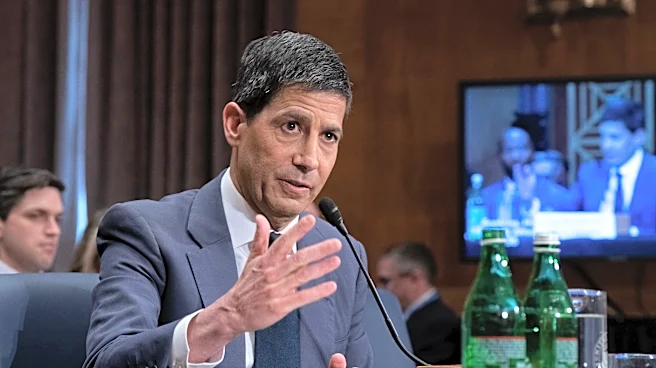
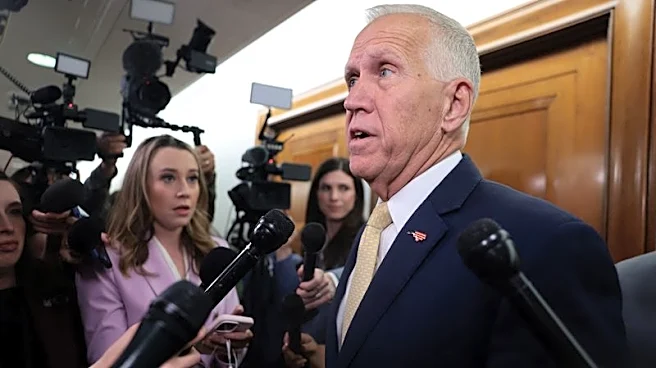
Kevin Warsh, nominated by President Trump to lead the Federal Reserve, has cleared a significant procedural hurdle in the Senate. The Senate committee approved his nomination with a 13 to 11 vote, strictly
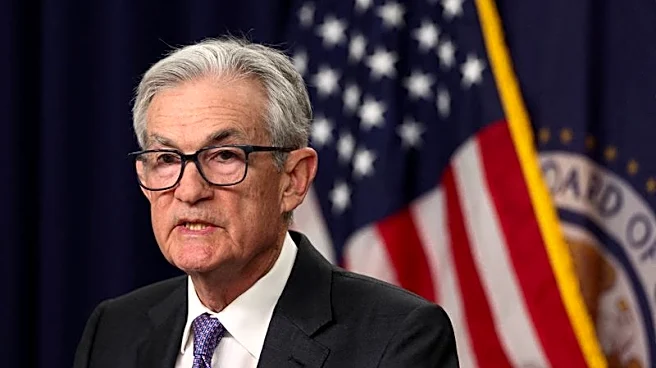
along party lines, with all Republicans supporting the nomination. This sets the stage for a full Senate confirmation vote in the coming days. Warsh, a former Fed governor, has promised significant changes at the central bank, aligning with President Trump's desire for rate cuts. The vote occurred as Jerome Powell, the current Fed chair, led what is likely his last policy-setting meeting. The Federal Open Market Committee is expected to maintain the current interest rate range due to ongoing inflation and global oil supply disruptions. Democrats, including Senator Elizabeth Warren, have expressed concerns about Warsh's independence from presidential influence, fearing he may act as a 'sock puppet' for Trump.
Why It's Important?
The potential confirmation of Kevin Warsh as Fed chair could significantly impact U.S. monetary policy. Warsh's alignment with President Trump's economic strategies, particularly regarding interest rate cuts, could lead to shifts in the Federal Reserve's approach to managing inflation and economic growth. This change in leadership comes at a critical time, with global economic pressures such as the Iran war affecting oil supplies and inflation. The decision also raises concerns about the Federal Reserve's independence, a cornerstone of its credibility and effectiveness. If Warsh implements the 'regime change' he has promised, it could alter the central bank's traditional role and its relationship with the executive branch, potentially affecting economic stability and investor confidence.
What's Next?
The timing of Warsh's confirmation vote remains uncertain, but it could occur before Jerome Powell's term ends on May 15. If confirmed, Warsh's leadership could lead to immediate policy shifts, including potential interest rate cuts. The future of Powell at the Fed is also in question; he may choose to remain on the board of governors, although President Trump has previously threatened to remove him. Such a move could lead to legal challenges, similar to past attempts to dismiss Fed officials. The outcome of these developments will be closely watched by financial markets and policymakers, as they could have far-reaching implications for U.S. economic policy and the Federal Reserve's role.