



What's Happening?
During the Houston Texans' Space City Day game on January 4, 2026, NASA's Johnson Space Center showcased the upcoming Artemis 2 mission. The event featured NASA astronaut Jessica Watkins and JSC employees Tessa Rundle and Daniel Kolodziejcyk, who appeared
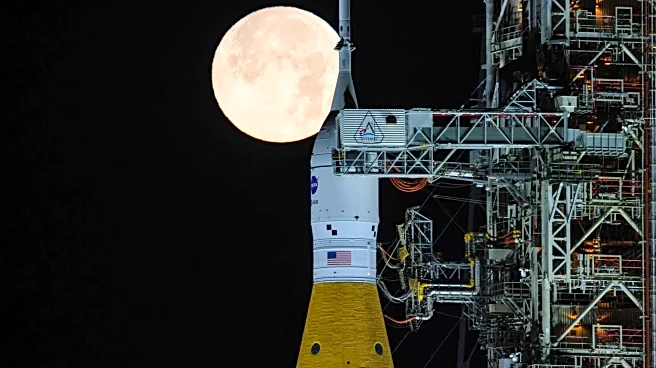
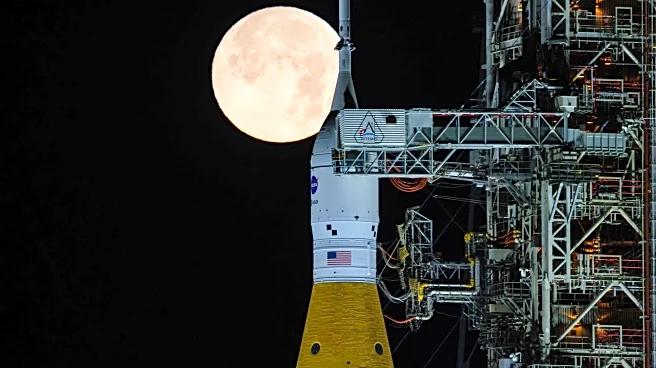
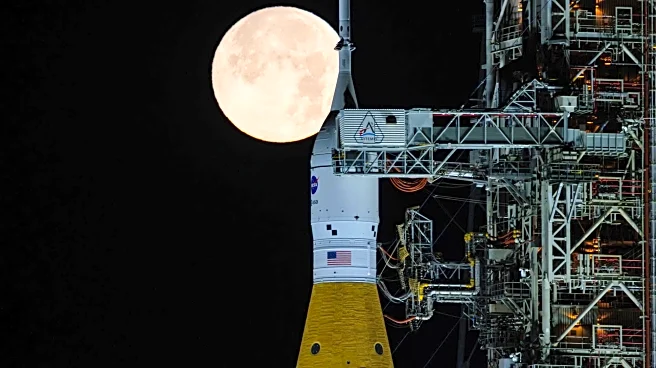
in Orion Crew Survival System spacesuits. The Artemis 2 mission is a 10-day lunar flyby involving four astronauts: NASA's Reid Wiseman, Victor Glover, Christina Koch, and Canadian Space Agency astronaut Jeremy Hansen. The mission aims to verify the Orion spacecraft's systems beyond low Earth orbit, building on the uncrewed Artemis 1 test flight to lunar orbit in 2022. The targeted launch date for Artemis 2 is between February and April 2026.
Why It's Important?
The Artemis 2 mission represents a significant step in NASA's Artemis campaign to return humans to the moon. By testing the Orion spacecraft's systems in deep space, the mission will pave the way for future lunar landing missions. The event at the Houston Texans game highlights the strong connection between NASA and the city of Houston, home to the Johnson Space Center, which plays a crucial role in human spaceflight and exploration. The public engagement initiatives, such as the 'Send Your Name with Artemis 2' campaign, aim to involve the public in space exploration, fostering interest and support for NASA's endeavors.
What's Next?
NASA plans to launch Artemis 2 as early as February 2026, with the mission serving as a precursor to subsequent lunar landing missions. The successful completion of Artemis 2 will be critical for validating the Orion spacecraft's capabilities and ensuring the safety and success of future crewed missions to the moon. Stakeholders, including NASA, the Canadian Space Agency, and the broader space exploration community, will closely monitor the mission's progress and outcomes.
Beyond the Headlines
The Artemis 2 mission underscores the importance of international collaboration in space exploration, with Canadian astronaut Jeremy Hansen participating alongside NASA astronauts. This collaboration reflects the growing trend of multinational partnerships in advancing space technology and exploration. Additionally, the public engagement initiatives highlight NASA's efforts to democratize space exploration, making it accessible and relatable to the general public.