










What's Happening?
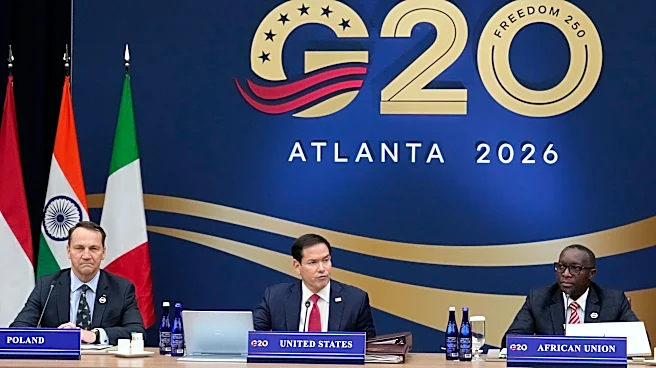
During Plenary Session III of the G20 Foreign Ministers’ Meeting in Atlanta on October 31, 2026, Deputy Foreign Minister Ma Zhaoxu delivered remarks highlighting the current complex and volatile geopolitical situation. He noted that industrial and supply
chains are becoming increasingly fragmented, posing a significant threat to global economic growth and recovery. Ma Zhaoxu emphasized the critical need for an open and cooperative international environment to foster development across all nations, asserting that protectionism ultimately yields no winners. He warned that erecting trade barriers and pursuing decoupling strategies would only destabilize global industrial and supply chains, thereby harming collective interests. The Deputy Foreign Minister urged G20 members to commit to building an open world economy and to take concrete actions to ensure the stability and smooth operation of these vital global networks. He proposed four key areas for action: deepening policy coordination, strengthening trade connectivity, harnessing innovation, and promoting inclusive development.
Why It's Important?
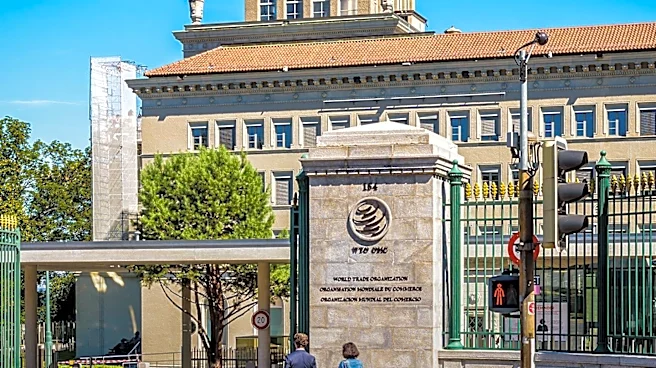
The statements from the G20 meeting underscore a significant concern among major global economies regarding the stability of international trade and geopolitical relations. The fragmentation of supply chains, exacerbated by geopolitical tensions, directly impacts U.S. industries that rely on global sourcing and export markets. Increased protectionism and trade barriers could lead to higher costs for consumers, reduced corporate profits, and slower economic growth within the United States. The call for deeper policy coordination among G20 members is crucial for preventing negative economic spillovers that could affect the U.S. economy. Furthermore, the emphasis on strengthening trade connectivity and upholding a WTO-centered international trading system is vital for U.S. businesses seeking fair and predictable market environments. The proposals to harness innovation, particularly in artificial intelligence, and promote inclusive development also highlight areas where U.S. leadership and collaboration could shape future global economic and technological landscapes, influencing competitiveness and job creation.
What's Next?
Following the G20 Foreign Ministers' meeting, the focus will likely shift to how member states, including the United States, implement the proposed strategies. Deeper policy coordination will require ongoing diplomatic efforts and multilateral discussions to align macroeconomic policies and prevent trade disputes. The call to strengthen trade connectivity suggests potential future negotiations aimed at reducing trade barriers and reinforcing the World Trade Organization's role, which could impact U.S. trade policy and agreements. Efforts to harness innovation, particularly in AI, may lead to increased international collaboration on technology standards and governance frameworks, influencing U.S. tech companies and research institutions. Additionally, the push for inclusive development could see increased investment in global infrastructure and critical mineral supply chains, areas where the U.S. has strategic interests. Stakeholders, including U.S. government agencies, multinational corporations, and trade organizations, will be closely monitoring these developments for opportunities and challenges.
Beyond the Headlines
The G20 discussions reflect a broader global anxiety about the erosion of multilateralism and the rise of economic nationalism, which could have profound long-term implications for the U.S. The fragmentation of supply chains is not merely an economic issue but also a geopolitical one, as nations increasingly view economic dependencies through a national security lens. This could lead to a strategic re-evaluation of global supply chains by U.S. companies, potentially encouraging reshoring or nearshoring initiatives to reduce vulnerabilities, even if it means higher production costs. The emphasis on AI governance also points to an emerging ethical and regulatory frontier, where the U.S. will need to balance innovation with concerns about fairness, equity, and security. The call for an open world economy, while seemingly straightforward, implicitly challenges protectionist sentiments that have gained traction in various countries, including the U.S., suggesting a potential ideological battle over the future of global economic integration.