


What's Happening?
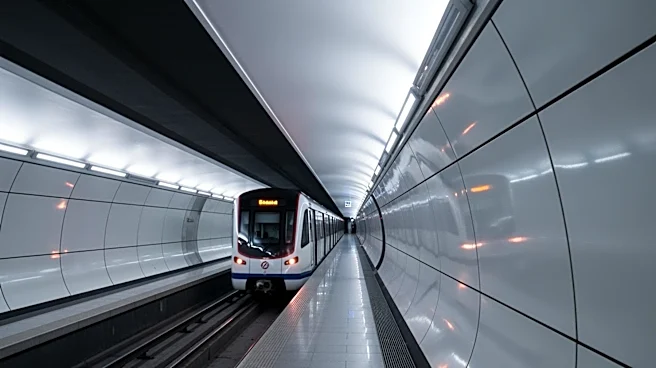
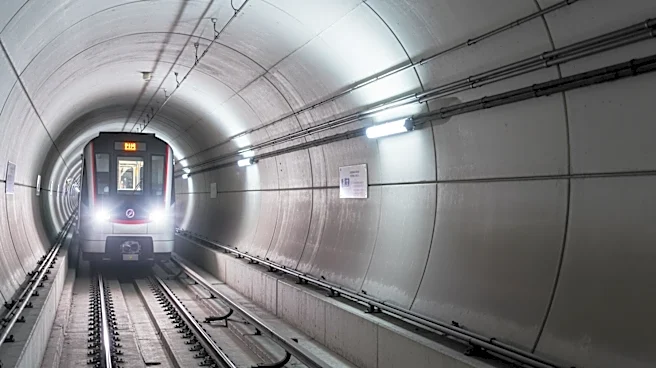
The Los Angeles Metro has inaugurated the first phase of its D Line subway extension, a significant development in the city's public transit infrastructure. This $9.7 billion project extends the subway under Wilshire Boulevard, adding three new underground
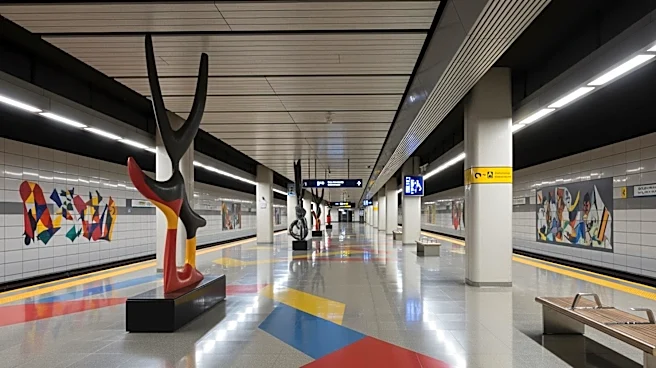
stations at Wilshire/La Brea, Wilshire/Fairfax, and Wilshire/La Cienega. These stations provide access to key Los Angeles landmarks, including the Los Angeles County Museum of Art and the Beverly Center. The extension aims to reduce travel time significantly, with a trip from Union Station to Wilshire/La Cienega now taking just 21 minutes, compared to up to 45 minutes by car. This project is part of a broader effort to expand Southern California's rail network, with plans to extend the line further west to Westwood by 2027, in time for the 2028 Olympic and Paralympic Games.
Why It's Important?
The opening of the D Line extension is a pivotal moment for Los Angeles, a city historically reliant on car travel. By providing a faster and more efficient public transit option, the Metro aims to encourage more residents to use public transportation, potentially reducing traffic congestion and pollution. The success of this extension could set a precedent for future transit projects in the region, influencing urban planning and development. However, the challenge remains to attract a significant number of riders, as many Angelenos are accustomed to driving. The project's success could also impact economic activities by improving access to commercial areas and potentially increasing property values along the new transit line.
What's Next?
As the D Line extension becomes operational, Metro officials will monitor ridership levels and gather feedback to improve service. The line's extension to Westwood is expected to be completed by 2027, further enhancing connectivity. Stakeholders, including local businesses and community groups, will likely play a role in promoting the new transit options. Additionally, the Metro will need to address potential challenges such as long wait times during off-peak hours, which could deter potential riders. The project's progress and public reception will be closely watched as Los Angeles prepares for the 2028 Olympics, where efficient public transit will be crucial.