
What's Happening?
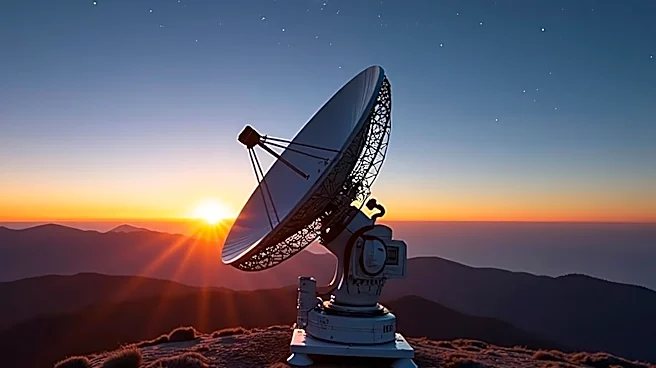
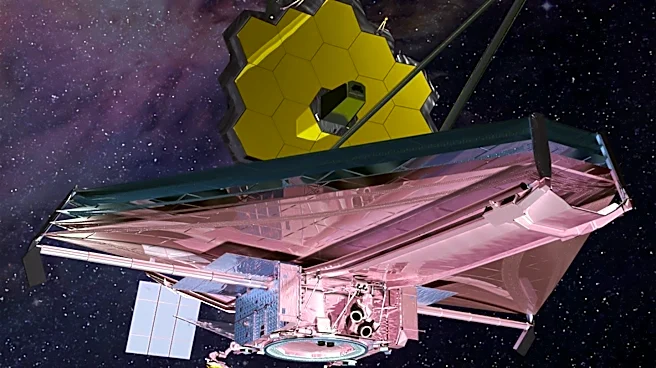
Astronomers utilizing NASA’s James Webb Space Telescope have successfully pinpointed the host galaxy of the most distant fast radio burst (FRB) observed to date, designated FRB 20240304B. First detected by the MeerKAT telescope, the radio data indicated
its extreme distance. The Webb telescope's NIRCam instrument located the host galaxy, and its NIRSpec instrument provided a precise redshift measurement of 2.148, placing the event approximately 3 billion years after the Big Bang. This host galaxy is a small, actively star-forming dwarf galaxy, which is significantly less massive (1,000 times) than typical FRB host galaxies. This finding challenges existing theories regarding the origin of FRBs, particularly those suggesting they result from the merger of two neutron stars, a process expected to take billions of years and thus be associated with older, more evolved stellar populations. The team's work, published in the journal Science, suggests that the FRB is unlikely to have been produced by such a merger.
Why It's Important?
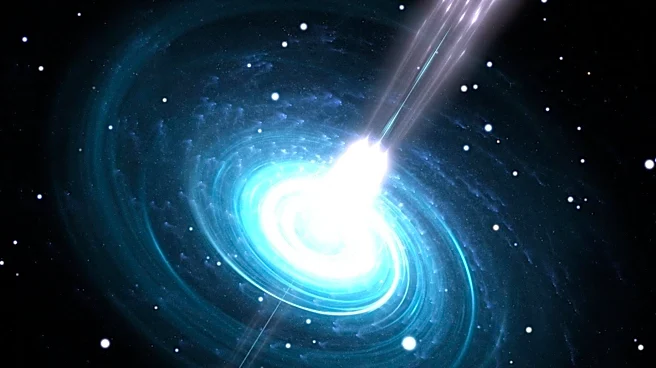
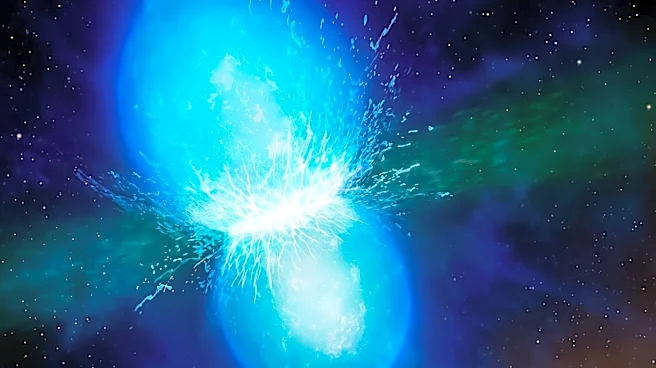
This discovery by the James Webb Space Telescope is crucial for advancing our understanding of fast radio bursts, which are enigmatic, millisecond-long flashes of radio emission from the distant universe whose origins remain largely unknown. By precisely locating the host galaxy of the farthest FRB, scientists can refine theories about what cosmic events generate these powerful bursts. The unexpected nature of the host galaxy—a small, actively star-forming dwarf galaxy rather than a massive, older galaxy—provides strong evidence against the neutron star merger hypothesis for this particular FRB. This strengthens the alternative theory that FRBs might originate from single, young, highly magnetic neutron stars (magnetars) formed relatively quickly after a massive star explodes. Understanding FRBs is also vital for tracing the 'cosmic web,' the otherwise invisible matter and structures in the universe, as FRBs act like cosmic flashlights, illuminating everything along their path. This research contributes significantly to astrophysics and cosmology, offering new insights into the early universe and the evolution of galaxies.
What's Next?
The team anticipates that the MeerKAT telescope will continue to detect and localize several distant FRBs annually, with redshifts greater than 1.0, meaning they originated more than halfway back to the universe's beginning. As new radio telescope facilities and instruments become operational, the pace of FRB discovery is expected to accelerate. The James Webb Space Telescope will remain an essential tool for characterizing the host galaxies of these newly discovered distant FRBs, providing crucial data to further refine and test theories about their origins. Future research will likely focus on analyzing more FRB host galaxies to build a more comprehensive picture of the types of environments that produce these bursts. This ongoing research will continue to leverage the combined capabilities of ground-based radio telescopes and advanced space observatories like Webb to unlock the mysteries of these cosmic phenomena and their role in understanding the universe's structure and evolution.
Beyond the Headlines
The precise measurement of the farthest fast radio burst by the James Webb Space Telescope has profound implications beyond merely identifying its origin. It highlights the extraordinary capabilities of modern astronomical instruments to probe the most distant and earliest epochs of the universe. The ability of FRBs to act as 'cosmic flashlights' offers a unique method to map the 'cosmic web'—the vast, invisible network of matter and structures that permeate the universe. By analyzing the imprints left on FRB signals as they travel through space, scientists can gain unprecedented insights into the distribution of matter, including dark matter, and the large-scale structure of the cosmos. This research pushes the boundaries of what is observable and understandable about the universe's infancy, potentially revealing new physics or refining our current cosmological models. The unexpected nature of the host galaxy also underscores the dynamic and diverse processes occurring in the early universe, challenging preconceived notions and opening new avenues for theoretical exploration.