




What's Happening?
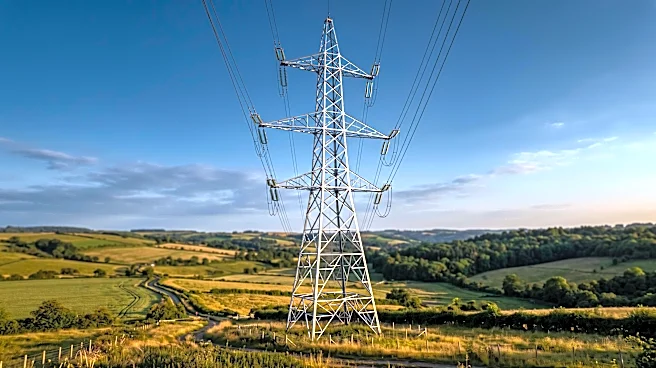
Potomac Edison has submitted a request to the State Corporation Commission (SCC) of Virginia for approval of its Gore-Doubs-Goose Creek Improvements Project. This initiative involves upgrading transmission lines that span West Virginia, Maryland, and Virginia.
The project specifically entails rebuilding approximately 29 miles of 138-kilovolt (kV) transmission lines across Frederick, Clarke, and Loudoun counties in Virginia. The company states that the new lines will primarily be situated within existing powerline routes to minimize environmental and community impact. Additionally, two new 138-kV lines are planned for construction between the existing Stonewall Substation and the proposed Woodside Substation in Frederick County, Maryland. Potomac Edison, a FirstEnergy Corp. company, must secure a Certificate of Public Convenience and Necessity (CPCN) in each state to confirm the project's necessity and compliance with statutory requirements. Applications have already been filed with the Maryland Public Service Commission (PSC) in March and with the SCC of Virginia on October 30, with a filing expected for the PSC of West Virginia next month.
Why It's Important?
This project is crucial for addressing the increasing energy demands in Virginia and enhancing the reliability and capacity of the existing electrical grid. According to Chris Beam, FirstEnergy president of West Virginia/Maryland, the upgrade is a practical step to strengthen the grid for current customers while preparing for the region's future energy needs. The reliance on existing powerline routes for the majority of the project aims to mitigate potential disruptions to the environment and local communities, a common concern with infrastructure developments. The upgrades are also designed to facilitate the integration of new electricity sources, including renewable energy, which aligns with broader national goals for energy diversification and sustainability. The project's approval and subsequent implementation would directly impact residents and businesses in the affected counties by ensuring a more stable and robust power supply, potentially reducing outages and supporting economic growth dependent on reliable energy.
What's Next?
Pending regulatory approvals from the State Corporation Commission of Virginia, the Maryland Public Service Commission, and the Public Service Commission of West Virginia, construction for the Gore-Doubs-Goose Creek Improvements Project is slated to commence in 2028. The Virginia portion of the project is anticipated to be in service by December 2030. Potomac Edison was awarded this project by PJM Interconnection in 2023, following a process to address system reliability concerns. The company will continue to navigate the regulatory processes in each state, which involve demonstrating the project's necessity and adherence to relevant statutory requirements. The outcome of these regulatory reviews will determine the project's timeline and ultimate implementation, with significant implications for regional energy infrastructure and future energy supply.
Beyond the Headlines
The proposed transmission line upgrade highlights the ongoing challenge of balancing increasing energy demands with environmental and community considerations. While the project aims to improve reliability and integrate renewable energy, the process of securing approvals across multiple states underscores the complex regulatory landscape for large-scale infrastructure projects. The emphasis on utilizing existing powerline routes reflects a strategic approach to minimize new land acquisition and environmental impact, a critical factor in public acceptance and project feasibility. This development also points to the broader trend of modernizing aging infrastructure to support a more resilient and sustainable energy future, a national priority given the growing frequency of extreme weather events and the push for decarbonization. The success of such projects often depends on effective stakeholder engagement and transparent communication with affected communities.