
What's Happening?
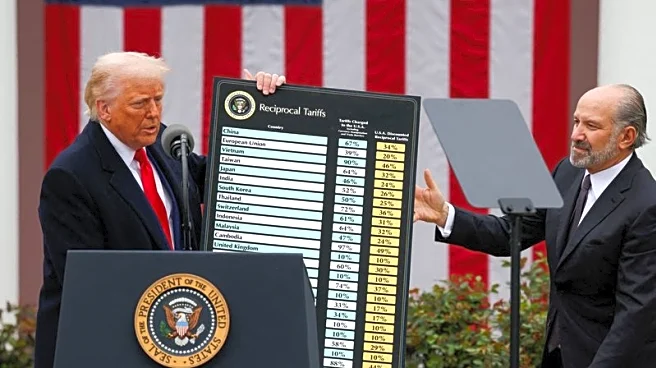
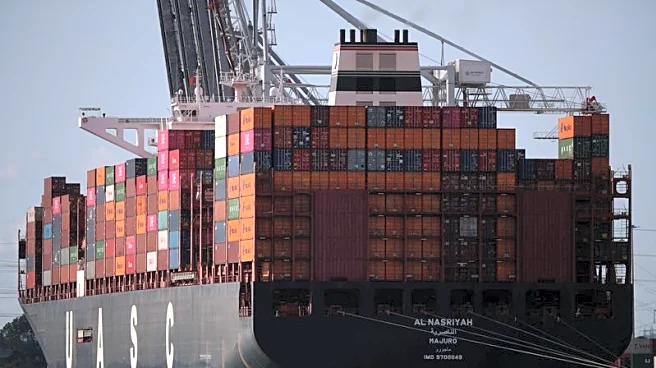
The U.S. Supreme Court has ruled that the International Emergency Economic Powers Act (IEEPA) does not authorize President Trump to impose tariffs, creating significant uncertainty for U.S. trade policy. The decision affects over $175 billion in tariffs collected
under IEEPA, with no clear mechanism for refunds. The ruling limits presidential tariff powers, requiring the administration to seek alternative legal authorities for imposing tariffs.
Why It's Important?
This ruling has major implications for U.S. trade policy and the economy. By curbing presidential tariff powers, the decision could lead to more predictable trade relations, benefiting businesses and consumers. However, the uncertainty surrounding tariff refunds and the administration's response may create short-term instability. The ruling emphasizes the need for clear congressional authorization in economic policy, potentially influencing future legislative and executive actions.
What's Next?
The administration plans to invoke alternative legal authorities to maintain tariffs, indicating ongoing trade policy volatility. Businesses must navigate this uncertainty, with potential impacts on supply chains and pricing. The refund process for IEEPA tariffs remains unresolved, posing logistical challenges for the U.S. Treasury and affected companies. Stakeholders will monitor the administration's next steps and potential legislative responses to ensure compliance with the court's decision.