


What's Happening?
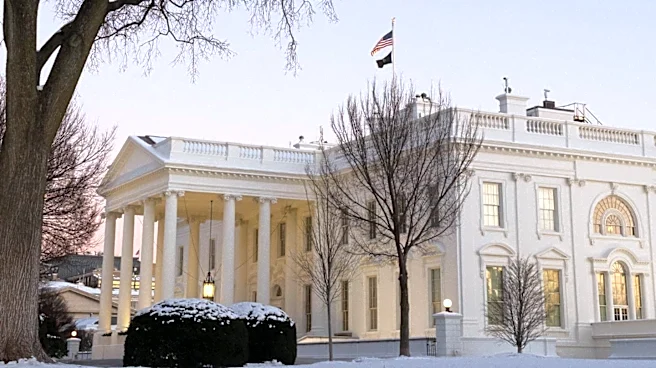
National Correspondent Rory O'Neill is reporting on a busy week at the White House, marked by significant developments in both domestic and international policy. President Trump held a meeting with technology leaders, indicating ongoing engagement with the tech sector.
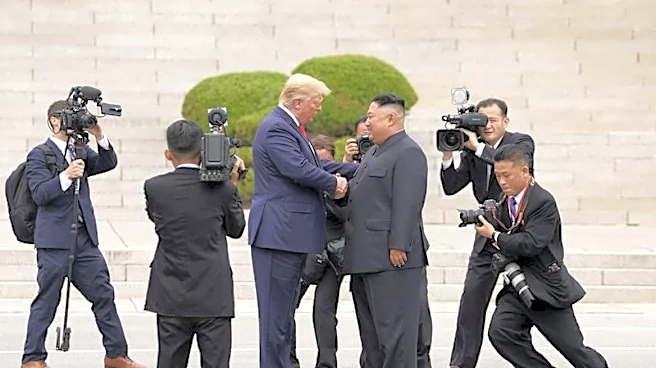
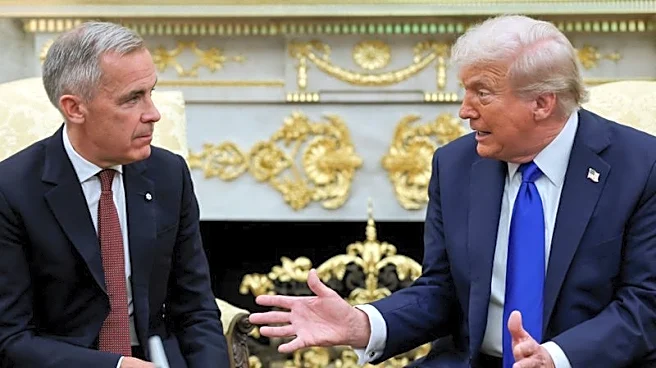
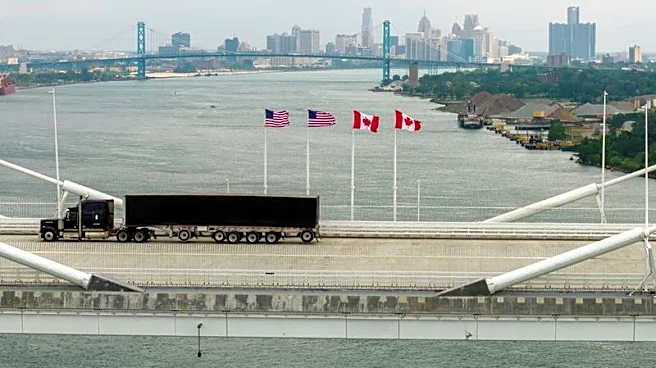
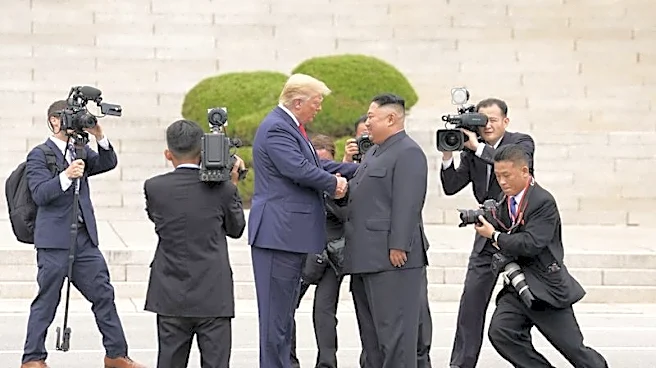
Concurrently, President Trump announced plans to meet with the President of North Korea later this year, signaling continued diplomatic efforts on the Korean Peninsula. In economic news, negotiations are actively underway to prevent a scheduled 50-percent tariff on Canadian imports from taking effect. These discussions highlight the administration's focus on trade relations and its potential impact on North American economic ties. The confluence of these events underscores a dynamic period for the White House, with multiple high-stakes issues being addressed simultaneously.
Why It's Important?
The White House's activities, as reported by Rory O'Neill, carry substantial implications for U.S. industries, foreign policy, and economic stability. The meeting with technology leaders suggests the administration's interest in the tech sector's role in the U.S. economy, potentially influencing future regulations or support for innovation. The planned meeting with the President of North Korea is a critical diplomatic endeavor, with the potential to shape regional security and international relations. A successful dialogue could lead to de-escalation or new agreements, while a breakdown could heighten tensions. Furthermore, the ongoing negotiations to halt tariffs on Canadian imports are vital for U.S. businesses that rely on cross-border trade. A 50-percent tariff could significantly increase costs for consumers and producers, disrupt supply chains, and strain economic relations with a key trading partner. The outcome of these negotiations will directly affect various U.S. industries, from manufacturing to agriculture, and could influence broader economic growth.
What's Next?
Looking ahead, the White House agenda suggests several key developments. The outcome of the negotiations regarding Canadian tariffs will be closely watched, as a resolution could prevent significant economic disruption, while a failure could trigger retaliatory measures and higher costs for consumers and businesses. Further details are expected to emerge regarding President Trump's planned meeting with the President of North Korea, including the timing, location, and specific agenda items. This diplomatic engagement will likely be a focal point of international attention, with potential implications for global security and non-proliferation efforts. The discussions with technology leaders may also lead to new policy initiatives or regulatory frameworks impacting the tech industry. Stakeholders across various sectors will be monitoring these developments for their potential impact on policy, trade, and international relations.
Beyond the Headlines
Beyond the immediate policy implications, the White House's busy week reflects broader trends in U.S. governance. The simultaneous focus on technology, international diplomacy, and trade underscores the complex and interconnected challenges facing the administration. The engagement with tech leaders highlights the increasing importance of technology in national policy, from economic competitiveness to national security. The continued pursuit of high-level diplomatic meetings, such as with North Korea, indicates a strategic approach to foreign policy that prioritizes direct engagement, even on historically intractable issues. The tariff negotiations with Canada also point to the ongoing re-evaluation of international trade agreements and the administration's emphasis on protecting domestic industries. These developments collectively illustrate a dynamic and often unpredictable policy environment, where decisions in one area can have ripple effects across multiple domains, shaping the long-term trajectory of U.S. economic and geopolitical standing.