



What's Happening?
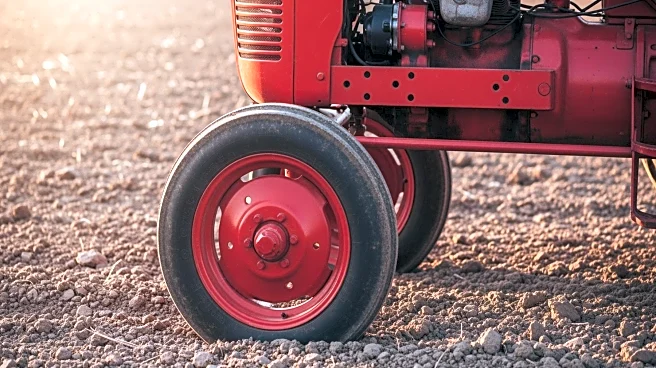
International Harvester introduced the Farmall Cub in 1947, marking a significant development in North American agricultural history. This small tractor was designed specifically for small farms, truck crop growers, and rural homesteads. It quickly gained
popularity due to its simplicity, durability, and affordability, effectively replacing horses for many small-scale farmers. The Farmall Cub was particularly appealing during the post-World War II agricultural boom when larger tractors were too expensive and impractical for small farms. The Cub's design included an offset 'Cultivision' feature, providing operators with an unobstructed view for precision cultivation. It also boasted a versatile implement system, allowing for easy attachment of various farming tools. Over the years, the Farmall Cub evolved, with models like the Lo-Boy introduced for specific tasks such as mowing and groundskeeping. Despite production ending in 1979, the Farmall Cub remains a beloved and functional piece of equipment for many farmers.
Why It's Important?
The introduction of the Farmall Cub was a pivotal moment for small-scale farming in America. It provided an affordable and efficient alternative to larger, more expensive tractors, enabling small farmers to increase productivity and reduce reliance on horses. This innovation helped shape postwar agriculture by making mechanized farming accessible to a broader range of farmers. The Farmall Cub's enduring popularity highlights its reliability and mechanical simplicity, making it a favorite among vintage tractor enthusiasts and hobby farmers. Its legacy continues as a symbol of small-farm ingenuity, demonstrating the impact of tailored agricultural solutions on the farming industry.
What's Next?
While the Farmall Cub is no longer in production, its influence persists in the agricultural community. Many of these tractors are still operational, supported by a strong community of enthusiasts dedicated to restoration and maintenance. The continued use and admiration of the Farmall Cub suggest that small-scale farming solutions remain relevant, especially as interest in sustainable and localized agriculture grows. Future developments in agricultural machinery may draw inspiration from the Farmall Cub's design principles, emphasizing affordability, versatility, and ease of use for small-scale operations.
Beyond the Headlines
The Farmall Cub's story is not just about agricultural machinery but also about the cultural and economic shifts in postwar America. It represents a move towards democratizing technology, making advanced farming tools accessible to smaller operations. This shift contributed to the transformation of rural economies and the modernization of farming practices. The Farmall Cub also underscores the importance of designing equipment that meets the specific needs of its users, a principle that continues to resonate in various industries today.