



What's Happening?
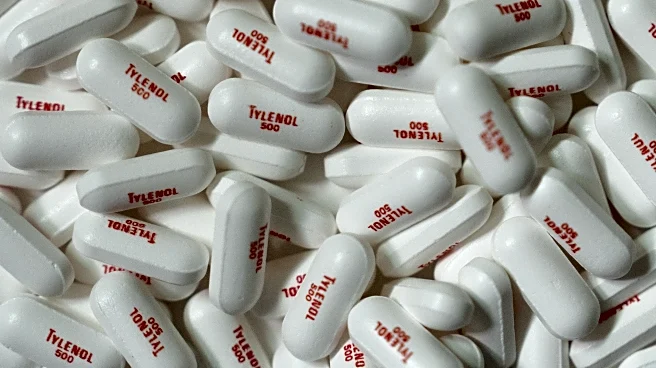
In September 2025, President Trump advised pregnant women to avoid using Tylenol, claiming it could increase the risk of autism in their babies. This statement led to a significant decrease in the prescription of Tylenol, or acetaminophen, in emergency
rooms for pregnant women, as reported by a study published in The Lancet. The study, led by Dr. Jeremy Faust from Brigham and Women's Hospital, found a 10% reduction in Tylenol orders for pregnant patients in the months following the announcement. The data was collected from electronic health records of over 1,600 hospitals. Despite the lack of scientific evidence supporting the president's claim, the immediate impact on prescription behavior was evident. Dr. Caleb Alexander from Johns Hopkins Bloomberg School of Public Health noted the influence of the president's words on both prescribers and patients.
Why It's Important?
The incident underscores the significant influence of presidential statements on public health behaviors and medical practices. The reduction in Tylenol prescriptions highlights how quickly misinformation can affect healthcare decisions, potentially leading to inadequate pain management and fever control for pregnant women. This situation raises concerns about the dissemination of unverified medical advice and its impact on public health. The study also observed an increase in prescriptions for leucovorin, a B vitamin suggested by President Trump as an autism treatment, despite the lack of large clinical trials to support its efficacy. The event emphasizes the need for healthcare professionals and policymakers to address misinformation and ensure that medical advice is based on credible scientific evidence.
What's Next?
While the study noted that Tylenol use began to return to normal levels by December, the long-term effects of such statements on public health practices remain a concern. Healthcare providers may need to engage in more proactive communication to counteract misinformation and reassure patients about the safety and efficacy of established medical treatments. Additionally, there may be discussions within the medical community and regulatory bodies about the need for clearer guidelines and public education to prevent similar situations in the future. The incident may also prompt further research into the impact of public figures' statements on healthcare behaviors.