





What's Happening?
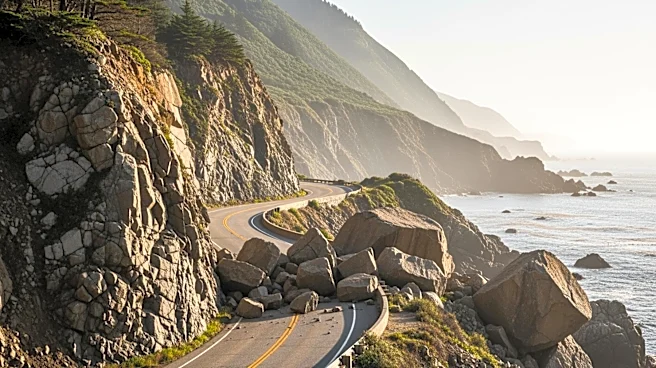
A rockfall incident on Kamehameha Highway near Waimea Bay, O'ahu, has resulted in a lane closure that could last for several months. The Hawaii Department of Transportation is working on a permanent rockfall protection system, estimated to cost $20 million
and take three to four months to complete. The closure affects a 700-foot stretch of the highway, with traffic being contraflowed in the remaining lane. The fallen boulders, considered significant in Hawaiian culture, have been relocated to Waimea Valley, where a cultural blessing is scheduled.
Why It's Important?
The lane closure on a major highway highlights the challenges of maintaining infrastructure in areas prone to natural events like rockfalls. The incident underscores the need for effective disaster preparedness and infrastructure resilience, particularly in regions with significant cultural and environmental considerations. The prolonged closure could impact local traffic, tourism, and daily commutes, emphasizing the importance of timely and efficient infrastructure repairs. The cultural significance of the fallen boulders also reflects the intersection of modern infrastructure needs and traditional cultural practices.
What's Next?
The Hawaii Department of Transportation will continue its efforts to install a permanent rockfall protection system. The project will involve coordination with cultural practitioners to ensure the respectful handling of the boulders. Traffic management strategies will be crucial to minimize disruptions during the construction period. The situation may prompt further discussions on infrastructure investment and the integration of cultural considerations in public works projects.
Beyond the Headlines
The incident raises broader questions about the balance between infrastructure development and cultural preservation. The handling of the fallen boulders reflects a commitment to respecting Hawaiian cultural practices, which could serve as a model for other regions facing similar challenges. The event also highlights the importance of community engagement and cultural sensitivity in public infrastructure projects.