
What's Happening?
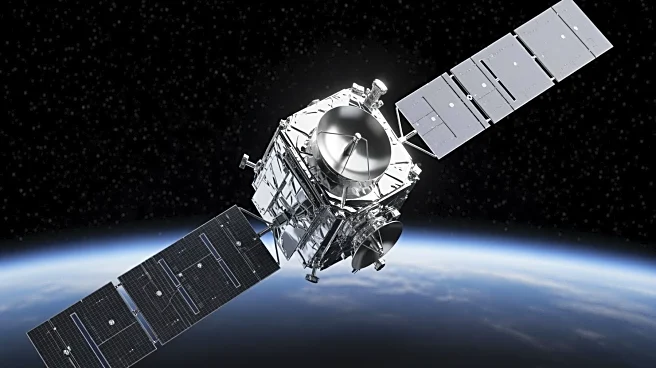
Iran has successfully launched three domestically produced Earth-observation satellites into orbit with the assistance of a Russian Soyuz rocket. The launch took place from the Vostochny Cosmodrome in Siberia
and included a total of 52 satellites from various countries and organizations. The Iranian satellites, named Paya, Zafar 2, and Kowsar, are intended for environmental and agricultural monitoring. This event marks a significant collaboration between Iran and Russia in the field of space exploration, highlighting Iran's efforts to advance its aerospace capabilities despite facing Western sanctions. Iranian officials have emphasized the peaceful and scientific nature of their space program, framing the successful launch as a demonstration of resilience and domestic engineering talent.
Why It's Important?
The launch of these satellites is significant as it underscores Iran's determination to continue developing its space technology despite international sanctions. The collaboration with Russia not only provides Iran with the necessary launch capabilities but also signals a strengthening of geopolitical ties between the two nations. This partnership is particularly noteworthy given Russia's increasing isolation on the global stage following its actions in Ukraine. For Iran, the ability to deploy satellites for environmental and agricultural purposes enhances its infrastructure and data collection capabilities, which can have positive implications for its economy and resource management. However, the dual-use nature of space technology also raises concerns among Western nations about potential military applications.
What's Next?
Iran is likely to continue its focus on expanding its space program, potentially seeking further collaborations with countries like Russia to circumvent the limitations imposed by sanctions. The successful launch may encourage Iran to pursue additional satellite missions, further solidifying its presence in the regional space intelligence landscape. Meanwhile, Western nations may increase scrutiny of Iran's space activities, particularly regarding the potential military uses of its satellite technology. The geopolitical dynamics in the region could also shift as Iran and Russia deepen their cooperation in various sectors, including space exploration.
Beyond the Headlines
The launch of these satellites highlights the broader implications of international sanctions and the ways in which countries like Iran seek to navigate and overcome such restrictions. By partnering with Russia, Iran not only gains access to advanced space technology but also aligns itself with a major global power that shares its interest in challenging Western dominance. This development could influence the balance of power in the region and contribute to a realignment of alliances. Additionally, the emphasis on peaceful and scientific objectives in Iran's space program serves as a strategic narrative to counteract international criticism and justify its technological advancements.