


What's Happening?
Marcos De Niza High School in Tempe, Arizona, experienced significant roof damage and damage to surrounding areas of the building due to a monsoon storm on Wednesday night. Cleanup efforts are currently underway, with a restoration company on-site and crews
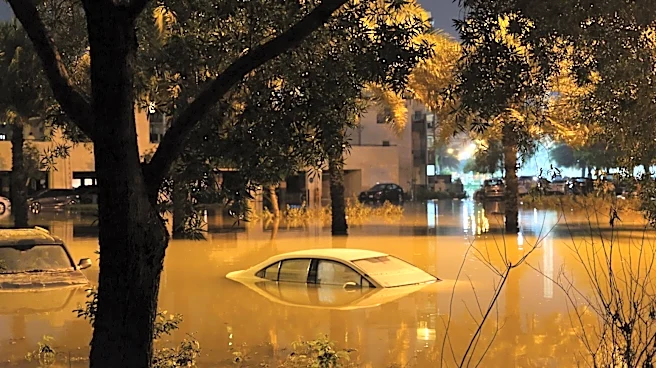
actively removing debris. Despite the damage, school officials have confirmed that classes will not be delayed or affected. However, access to the school's auditorium will be restricted until a structural assessment can be completed. The storm also impacted homes and apartments in Tempe, Mesa, and Chandler, with reports of fallen trees, punctured roofs, and flooded units. Homeowner Scott Kern described hearing a loud noise and discovering a large branch had pierced his ceiling, while renters Elias Castellano and Killin Shearl in Mesa reported their units flooding and electronic devices being damaged. In Chandler, city parks suffered extensive damage, with numerous trees downed and shade canopies destroyed, and residents are dealing with similar issues, including uprooted palm trees and blocked streets.
Why It's Important?
This event highlights the significant impact that severe weather, such as monsoon storms, can have on public infrastructure and private property in Arizona. The damage to Marcos De Niza High School, while not disrupting classes, necessitates immediate repair and assessment, potentially incurring substantial costs for the Tempe Union High School District. The widespread damage to homes and apartments in Tempe, Mesa, and Chandler underscores the vulnerability of residential areas to extreme weather, leading to financial burdens for homeowners and renters due as they face repairs and potential loss of property. The extensive damage to Chandler's city parks also affects public recreational spaces, requiring considerable resources and time for cleanup and restoration, which could impact community activities and local budgets. This situation emphasizes the ongoing challenges faced by communities in the region in preparing for and recovering from increasingly intense weather phenomena, affecting daily life and local economies.
What's Next?
Cleanup operations at Marcos De Niza High School are ongoing, with a structural assessment of the auditorium pending to determine the extent of repairs needed before it can be reopened. For affected residents in Tempe, Mesa, and Chandler, the immediate next steps involve assessing the full scope of damage to their properties, coordinating with insurance companies, and arranging for repairs. The city of Chandler anticipates a prolonged cleanup effort for its parks, with officials noting that the number of lost trees could double or triple, indicating that restoration will take considerable time and resources. Residents with downed trees and other debris are being asked for patience as city crews work through a backlog of requests. This event may also prompt local authorities and school districts to review and potentially enhance their infrastructure resilience plans and emergency response protocols in anticipation of future monsoon seasons.
Beyond the Headlines
The monsoon storm's impact extends beyond immediate physical damage, touching upon broader community resilience and preparedness for climate-related events. The incident at Marcos De Niza High School, while not affecting classes, underscores the importance of robust infrastructure maintenance in educational facilities to ensure student safety and continuity of learning. The experiences of homeowners and renters dealing with flooded homes and damaged property highlight potential gaps in disaster preparedness and insurance coverage for extreme weather events, which could disproportionately affect vulnerable populations. The extensive damage to public parks in Chandler also raises questions about urban planning and the selection of resilient landscaping that can withstand severe weather. This event serves as a stark reminder of the increasing frequency and intensity of extreme weather patterns, prompting a reevaluation of long-term strategies for climate adaptation and community-wide resilience in Arizona.