






What's Happening?
The 2010 Chilean mining disaster, which trapped 33 miners 2,300 feet underground, is being recognized for its extraordinary display of engineering in service of mercy. On August 5, 2010, a mine collapse occurred, leaving the miners stranded. It took 17
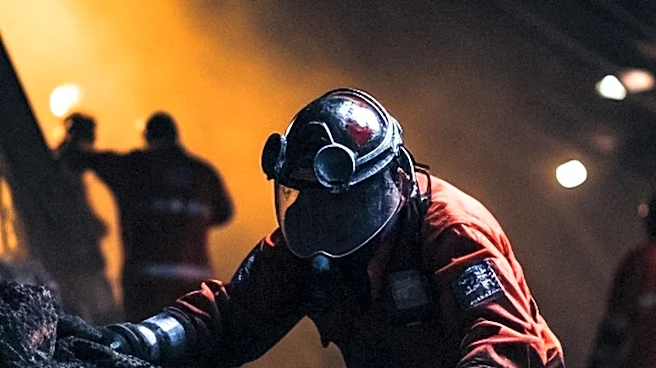
days for rescuers to confirm that all 33 individuals had survived the initial collapse. The rescue operation involved drilling a new tunnel and utilizing a specialized capsule known as the Phoenix to extract the miners one by one. This event captured global attention due to the challenging conditions and the innovative solutions employed to save the lives of those trapped deep within the earth. The successful extraction of all miners was a testament to international cooperation and engineering ingenuity.
Why It's Important?
The Chilean mine rescue of 2010 holds significant importance as a case study in disaster management, engineering innovation, and international collaboration. The event showcased the critical role of advanced drilling technology and specialized rescue equipment, such as the Phoenix capsule, in overcoming extreme environmental challenges. It also highlighted the psychological resilience of the trapped miners and the sustained efforts of rescue teams. The successful outcome provided valuable lessons for future underground rescue operations worldwide, emphasizing the need for robust safety protocols and rapid response capabilities in hazardous industries. The global attention it garnered underscored the universal human interest in survival and the power of collective effort in times of crisis.
What's Next?
While the original event occurred in 2010, the lessons learned from the Chilean mine rescue continue to influence safety standards and emergency preparedness in mining operations globally. Ongoing developments in rescue technology and subterranean exploration are likely to draw upon the experiences and innovations from this historic event. Future efforts in mining safety will focus on preventing similar incidents through improved structural integrity, advanced monitoring systems, and enhanced escape routes. Additionally, the psychological support provided to the miners during and after their ordeal has informed best practices for managing trauma in high-stress rescue situations, contributing to the development of more comprehensive support systems for victims of industrial accidents.
Beyond the Headlines
The Chilean mine rescue transcended a mere engineering feat; it became a powerful symbol of hope and human perseverance. The story resonated deeply across cultures, illustrating the capacity for human ingenuity and compassion in the face of overwhelming adversity. Beyond the immediate technical challenges, the incident sparked broader discussions about worker safety in hazardous industries, the ethical responsibilities of corporations, and the role of governments in protecting their citizens. The global outpouring of support and the sustained media coverage also highlighted the unifying power of shared human experience, demonstrating how a crisis in one part of the world can galvanize international attention and collective action, fostering a sense of global community and shared humanity.