

What's Happening?
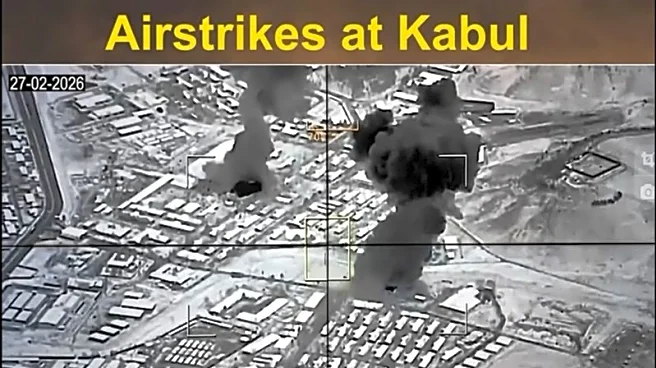
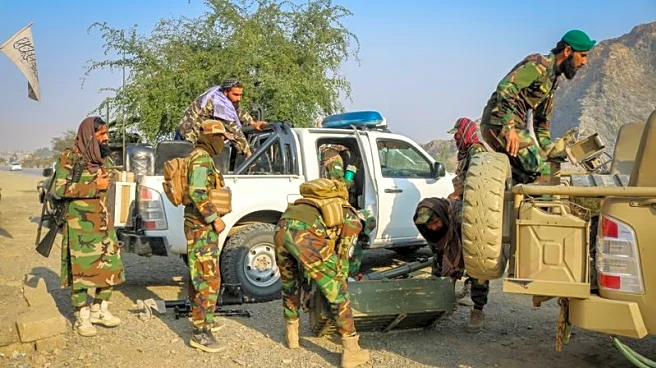
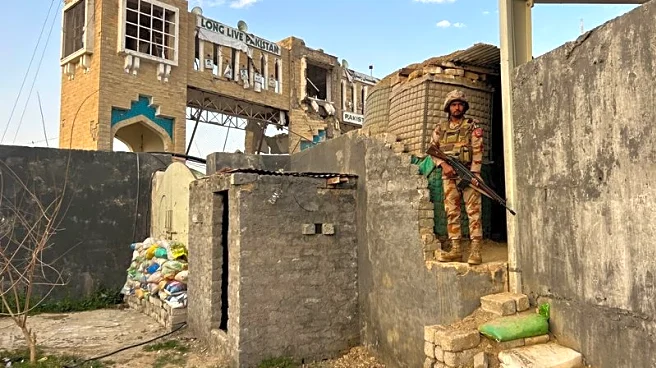
Pakistan has declared an 'open war' against Afghanistan following a series of retaliatory strikes by the Taliban. The conflict escalated when the Taliban launched attacks on military installations in northwest Pakistan, prompting Pakistan to conduct airstrikes
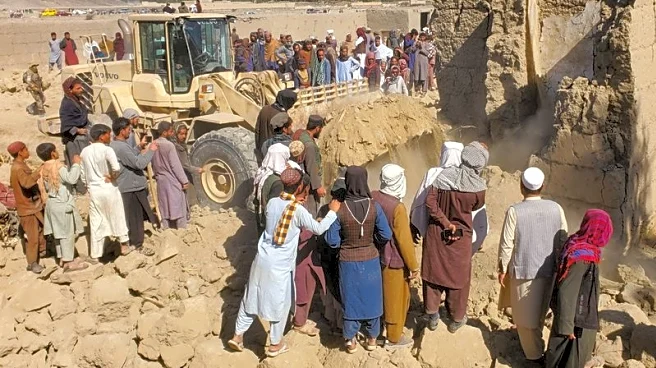
on Taliban targets in Kabul, Kandahar, and Paktia. Both nations have reported conflicting claims regarding casualties and damage. The violence marks a significant escalation in the ongoing tensions between the two countries, which have been simmering since the U.S. withdrawal from Afghanistan in 2021. Pakistan accuses Afghanistan of harboring militants responsible for attacks on its soil, while the Taliban denies these allegations. The United Nations and former U.S. ambassador to Afghanistan have called for a peaceful resolution to the conflict.
Why It's Important?
The escalation of violence between Pakistan and Afghanistan poses a significant threat to regional stability. The conflict could potentially destabilize an area already struggling with the presence of terrorist groups like the Islamic State and Al Qaeda. The ongoing hostilities may also impact global security, as strengthened terrorist groups could pose a threat beyond South Asia. The situation highlights the fragile nature of peace in the region and the challenges in maintaining diplomatic relations between neighboring countries with a history of conflict. The international community, including the United Nations, is urging both sides to seek diplomatic solutions to prevent further civilian casualties and regional destabilization.
What's Next?
The immediate future may see continued military engagements between Pakistan and Afghanistan unless diplomatic interventions are successful. The potential for further escalation remains high, with both sides showing no signs of backing down. International actors, including the United Nations, are likely to increase diplomatic efforts to mediate the conflict. However, the lack of a formal agreement following previous peace talks suggests that achieving a lasting resolution may be challenging. The situation requires careful monitoring as it could have broader implications for international security and regional alliances.
Beyond the Headlines
The conflict between Pakistan and Afghanistan underscores the complex geopolitical dynamics in South Asia. The involvement of external actors, such as India and Russia, adds layers to the conflict, with Pakistan accusing Afghanistan of acting as a proxy for India. The situation also highlights the challenges faced by the Taliban in governing Afghanistan and maintaining regional relations. The conflict could lead to a humanitarian crisis, with civilians caught in the crossfire and displaced from their homes. The international community's response will be crucial in addressing the immediate humanitarian needs and preventing further escalation.