






What's Happening?
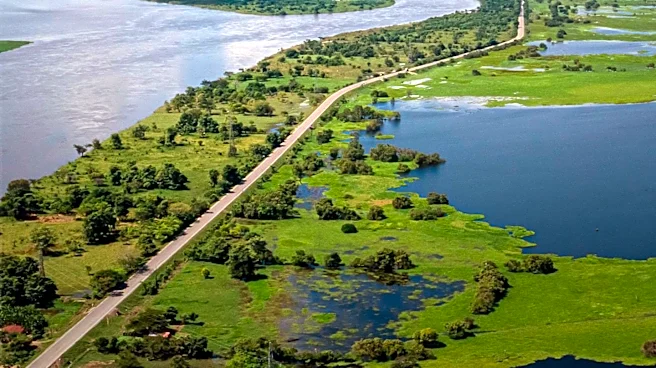
The Ohio Department of Natural Resources (ODNR) and the village of Ottawa Hills have announced the completion of a significant wetland project near the Ottawa River. This initiative, part of the H2Ohio program, aims to enhance water quality throughout
the region. The project involved the creation of stormwater retention and floodplain wetlands across a 23-acre site. According to Governor Mike DeWine, H2Ohio is actively improving water quality with over 500 wetlands either completed or in progress statewide. These new shallow wetlands are designed to hold up to 33 million gallons of stormwater annually, effectively slowing and filtering runoff before it reaches the Ottawa River and Lake Erie. This process is crucial for removing nutrients like phosphorus and nitrogen, which contribute to water pollution.
Why It's Important?
This project is vital for addressing water quality issues in Ohio, particularly in the Lake Erie watershed, which has historically suffered from harmful algal blooms caused by nutrient runoff. The H2Ohio initiative's focus on wetland creation provides a natural and sustainable solution to filter pollutants from stormwater, thereby protecting aquatic ecosystems and ensuring safer water for communities. Improved water quality in the Ottawa River directly benefits Lake Erie, a critical freshwater resource for millions of Americans. The removal of phosphorus and nitrogen is essential for mitigating environmental damage and supporting biodiversity. Furthermore, the project's inclusion of habitat creation for native plant species contributes to ecological restoration and strengthens the overall resilience of the local environment, impacting both public health and regional economic activities like fishing and tourism.
What's Next?
The completion of this wetland project marks a significant step in the ongoing H2Ohio initiative. Future efforts will likely involve continued monitoring of the wetland's effectiveness in filtering stormwater and removing nutrients. The success of this project could serve as a model for similar initiatives in other areas facing water quality challenges. Governor DeWine's statement about over 500 wetlands being in progress or completed suggests a sustained commitment to this approach across Ohio. This ongoing investment in natural infrastructure is expected to yield long-term benefits for the state's waterways. Additionally, the project's focus on native plant species indicates a broader strategy of ecological restoration, which may lead to further biodiversity enhancement efforts in the region.
Beyond the Headlines
Beyond its immediate environmental benefits, the H2Ohio initiative's success in the Ottawa River area highlights a growing trend towards nature-based solutions for infrastructure challenges. This approach not only addresses pollution but also provides co-benefits such as habitat creation, flood control, and enhanced recreational opportunities. The collaboration between state agencies and local communities, as seen with the ODNR and Ottawa Hills, underscores the importance of multi-level governance in tackling complex environmental issues. This project also subtly reinforces the economic value of healthy ecosystems, as clean water supports industries like tourism and fishing, and reduces the costs associated with water treatment. It represents a shift towards proactive environmental management, recognizing that investing in natural systems can be more cost-effective and sustainable than solely relying on engineered solutions.