





What's Happening?
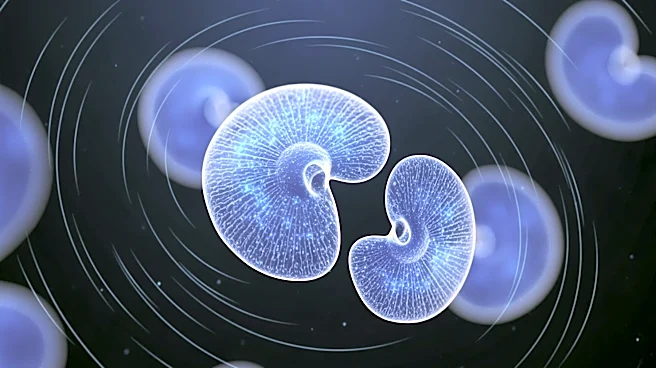
Scientists have discovered a new protozoan species, Euplotes gigatrox, that transforms into a cannibalistic 'supergiant,' hunting and devouring members of its own species. This behavior, previously unseen in single-cell organisms, expands the understanding
of developmental biology beyond multicellular animals. The microbe, identified in a seawater filtration system in Curaçao, exhibits complex behaviors such as changing size, shape, and feeding habits. As supergiants, they become predators, capturing and consuming their clonal relatives. The study, published in PNAS, reveals distinct developmental stages with differences in gene activity and protein production.
Why It's Important?
The discovery of Euplotes gigatrox challenges existing paradigms in developmental biology, highlighting the complexity and adaptability of single-cell organisms. This finding could lead to new insights into cellular behavior and evolution, potentially influencing research in genetics, ecology, and biotechnology. Understanding the mechanisms behind such transformations may offer applications in medical and environmental sciences, where single-cell organisms play crucial roles. The study also prompts a reevaluation of the capabilities of single-cell life forms, encouraging further exploration of their potential in various scientific fields.