


What's Happening?
The Indian Space Research Organisation (ISRO) is progressing with its Shukrayaan mission, India's first dedicated mission to Venus, targeting a March 2028 launch. The organization has completed the spacecraft's design reviews and has initiated the hardware
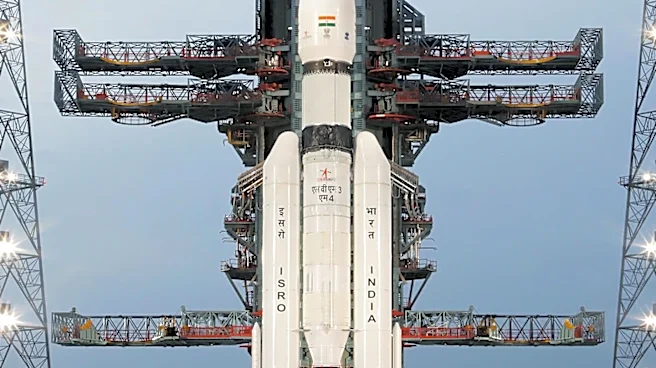
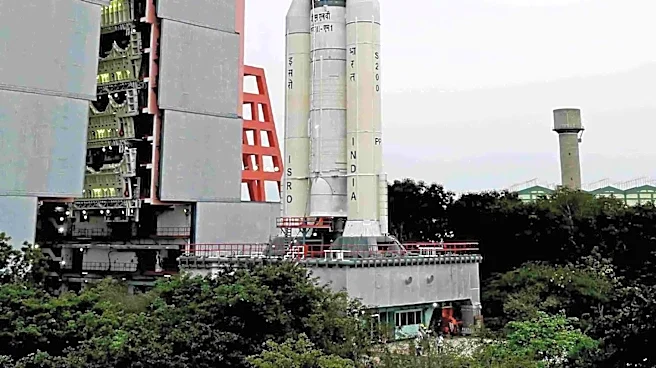
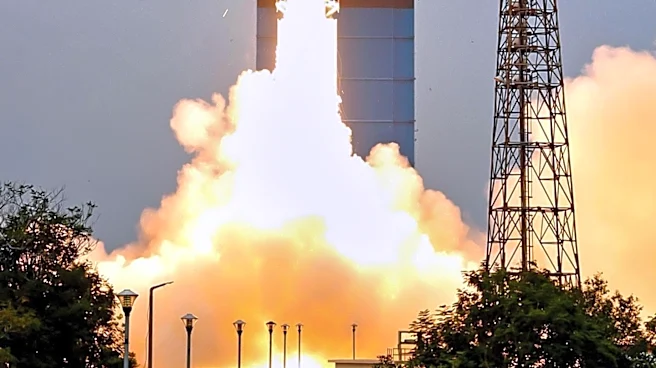
realization phase. This critical step involves manufacturing and developing the actual components for the spacecraft, including its scientific instruments and supporting systems. The mission, officially named the Venus Orbiter Mission (VOM), aims to study Venus's atmosphere, surface, and its interaction with solar radiation. The spacecraft is designed to carry 19 scientific payloads, comprising both Indian and international instruments, to investigate the planet's atmosphere, clouds, surface, subsurface, and ionosphere. Following hardware development, the next stages will include assembly, integration, and rigorous testing of the spacecraft to ensure its resilience to space travel conditions. The mission will be launched aboard ISRO's LVM3 rocket, which will place the spacecraft into an initial elliptical orbit around Earth before it performs a Venus Orbit Injection maneuver. The spacecraft will then use aerobraking to adjust its orbit, eventually settling into a scientific orbit of approximately 200 x 600 km around Venus, with an expected operational lifespan of five years.
Why It's Important?
The Shukrayaan mission is significant for several reasons, primarily for its potential to enhance humanity's understanding of planetary evolution. Venus, often referred to as Earth's twin due to its similar size, presents an extreme environment with surface temperatures reaching around 465 degrees Celsius and an atmosphere dominated by carbon dioxide. By studying the stark differences between Earth and Venus, scientists hope to gain insights into how two seemingly similar planets evolved into such divergent worlds. This mission could provide valuable data on Venus's geological history and atmospheric behavior, contributing to broader planetary science. Furthermore, the successful execution of Shukrayaan will strengthen India's capabilities in deep-space exploration, building upon its previous achievements in lunar and solar missions. The mission's advanced technological requirements, from spacecraft design and hardware realization to complex orbital maneuvers like aerobraking, will push ISRO's engineering and scientific boundaries, fostering innovation and expertise within the Indian space sector. The inclusion of international instruments also highlights collaborative opportunities in space research, potentially leading to global scientific advancements.
What's Next?
Following the current hardware realization phase, ISRO will proceed with the assembly and integration of the Shukrayaan spacecraft components. This will be followed by extensive testing to ensure the spacecraft's systems can withstand the harsh conditions of space, including evaluations of mechanical strength, electrical systems, communication equipment, and operational capabilities under extreme temperatures and vibrations. Concurrently, ISRO will finalize launch preparations and integrate the spacecraft with its LVM3 launch vehicle. After the planned March 2028 launch, the spacecraft will embark on its journey to Venus. Upon arrival, it will execute a Venus Orbit Injection maneuver and then utilize aerobraking over six to eight months to achieve its final scientific orbit. Once in orbit, the mission is expected to operate for five years, continuously collecting data on Venus's atmosphere, surface, and solar interactions. The scientific community will then analyze this data to publish findings, contributing to planetary science and potentially informing future missions to Venus or other terrestrial planets. The success of Shukrayaan will also influence future strategic decisions for India's space program, potentially paving the way for more ambitious deep-space exploration endeavors.
Beyond the Headlines
The Shukrayaan mission represents more than just a scientific endeavor; it signifies India's growing ambition and capability in the global space arena. As India continues to expand its space program, missions like Shukrayaan contribute to its geopolitical standing and technological prowess. The insights gained from studying Venus could have broader implications for understanding exoplanets and the conditions necessary for life, extending beyond our solar system. The mission also underscores the importance of international collaboration in space exploration, as evidenced by the inclusion of international payloads. This collaborative spirit can foster scientific diplomacy and shared knowledge, benefiting the global scientific community. Furthermore, the technological advancements and expertise developed during the Shukrayaan mission could have spin-off benefits for other sectors, such as materials science, computing, and engineering, driving innovation within India's industrial landscape. The long-term impact could include inspiring a new generation of scientists and engineers, reinforcing India's position as a significant contributor to space science and exploration.