






What's Happening?
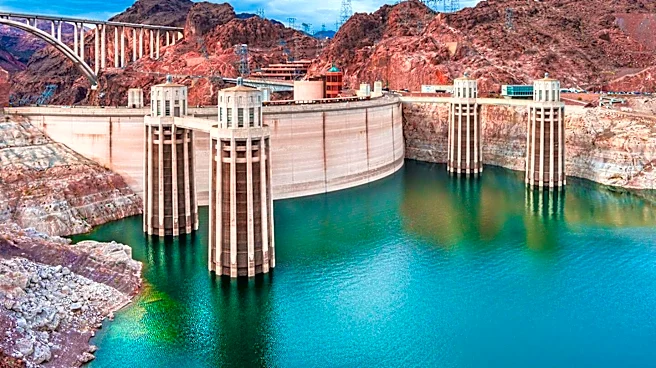
The receding water levels of Lake Mead have uncovered the ghost town of St. Thomas, Nevada, which was submerged in 1935 due to the construction of the Hoover Dam. Founded in 1865 by Mormon settlers, St. Thomas was a thriving community until the Boulder
Canyon Project Act authorized the dam's construction, leading to the town's inundation. As Lake Mead's water levels have fallen to historic lows, the remnants of St. Thomas, including streets and building foundations, have reemerged, allowing visitors to explore the once-buried town.
Why It's Important?
The reemergence of St. Thomas serves as a stark reminder of the environmental and historical impacts of large-scale infrastructure projects like the Hoover Dam. The declining water levels in Lake Mead, which have exposed the town, also highlight the ongoing challenges of water management and drought in the American Southwest. This situation poses significant threats to water supply and hydroelectric power generation, emphasizing the need for sustainable water management practices. The historical significance of St. Thomas offers insights into the region's past and the transformative effects of human intervention on natural landscapes.
What's Next?
As Lake Mead continues to experience low water levels, there may be increased efforts to address water conservation and management in the region. Policymakers and environmentalists might advocate for strategies to mitigate the effects of drought and ensure sustainable water use. The exposure of St. Thomas could also lead to increased interest in historical preservation and tourism, providing opportunities for educational and cultural engagement. Ongoing monitoring of Lake Mead's water levels will be crucial to understanding the long-term implications for the region's water resources and infrastructure.