






What's Happening?
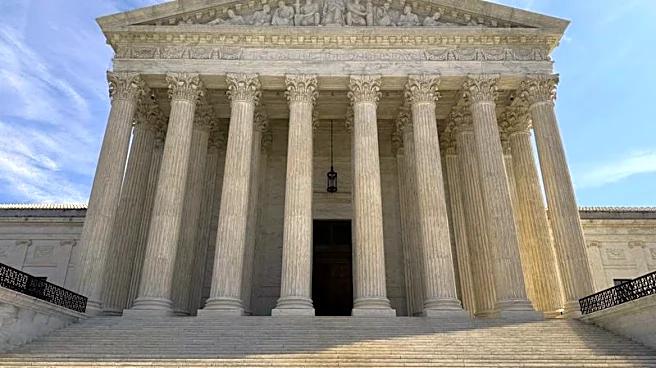
The Congressional Black Caucus is grappling with the implications of the Supreme Court's decision in Louisiana v. Callais, which has weakened the Voting Rights Act and threatens to reduce the number of majority-Black districts. This ruling could result
in the loss of up to one-third of the Caucus's 60 members due to redistricting in southern states. The decision has sparked concerns about the future representation of Black communities and the Caucus's influence within the Democratic Party. In response, Black Democrats are employing unconventional strategies, such as pressuring the private sector and launching campaigns with the NAACP to counteract GOP-led redistricting efforts.
Why It's Important?
The Supreme Court's decision represents a significant challenge to the political representation of Black communities in the U.S. The potential reduction in majority-Black districts could diminish the influence of the Congressional Black Caucus, which has been a powerful voice within the Democratic Party. This development raises broader questions about the protection of minority voting rights and the impact of redistricting on political representation. The situation underscores the ongoing struggle for racial equity in the political arena and highlights the need for strategic responses to safeguard the interests of marginalized communities.
What's Next?
As the effects of the Supreme Court's decision unfold, the Congressional Black Caucus and its allies will likely continue to explore legal and political avenues to challenge redistricting efforts that threaten minority representation. The upcoming elections will be a critical test of the Caucus's ability to maintain its influence and advocate for Black communities. Additionally, the decision may prompt renewed calls for legislative action to strengthen voting rights protections at the federal level. The outcome of these efforts will have significant implications for the future of minority representation in U.S. politics.