
What's Happening?
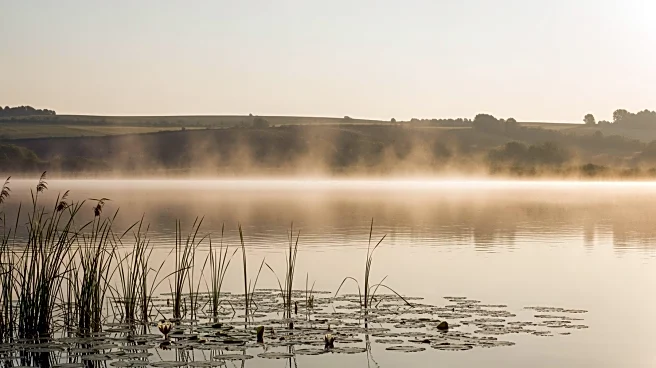
Boeng Sneh Lake, located in Cambodia's Prey Veng Province, is a vital freshwater resource spanning 3,924 hectares. It supports the livelihoods of thousands, providing water for agriculture, fish for nutrition,
and a buffer against seasonal flooding. The lake's ecosystem is rich, hosting over 50 species of water birds and numerous fish species. However, the lake is under threat from climate-induced drought, increased agro-chemical use, overfishing, and land encroachment. These pressures are exacerbated by the intensified agricultural practices, which have increased rice production cycles from one to three per year. In response, the Fisheries Administration has established Community Fisheries to protect core fish refuge areas, and the Ministry of Environment has designated a significant portion of the lake as a Multiple Use Area. Efforts are underway to manage these challenges sustainably through a District Technical Working Group, which aims to coordinate resource management among communities, government agencies, and partners.
Why It's Important?
The situation at Boeng Sneh Lake highlights the broader challenges faced by ecosystems globally, where the balance between human needs and environmental sustainability is increasingly strained. The lake's health is crucial for the local economy, particularly for the 10,911 households that rely on it for farming and fishing. The pressures on Boeng Sneh are indicative of the challenges faced by many water bodies worldwide, where climate change and human activities threaten biodiversity and livelihoods. The efforts to protect and manage the lake's resources are critical not only for the local community but also as a model for sustainable resource management in similar ecosystems. The success of these initiatives could influence policy and conservation strategies in other regions facing comparable challenges.
What's Next?
The ongoing efforts to protect Boeng Sneh Lake involve a collaborative approach through the District Technical Working Group, which includes stakeholders from various sectors. This group aims to promote dialogue and resolve conflicts over resource use, ensuring that the lake's resources are managed sustainably. Future steps may involve further strengthening of community-based ecotourism and conservation initiatives to enhance the lake's ecological and economic value. Monitoring and adapting to climate impacts will be crucial, as will continued support from international organizations and initiatives like the Resilient Aquatic Food Systems. The outcomes of these efforts could provide valuable insights for managing similar environmental challenges globally.
Beyond the Headlines
The challenges faced by Boeng Sneh Lake underscore the complex interplay between environmental conservation and economic development. The lake's situation raises important ethical questions about resource allocation and the responsibility of various stakeholders to protect natural ecosystems. The involvement of international organizations highlights the global nature of these challenges and the need for cross-border cooperation in addressing them. Long-term, the success of initiatives at Boeng Sneh could lead to shifts in how similar ecosystems are managed, emphasizing the importance of integrating local knowledge with scientific research and policy-making.