





What's Happening?
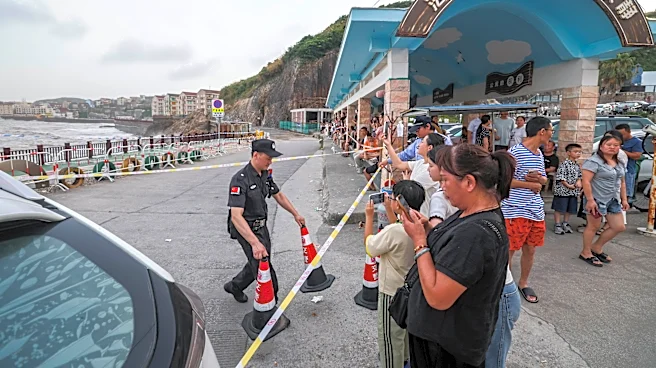
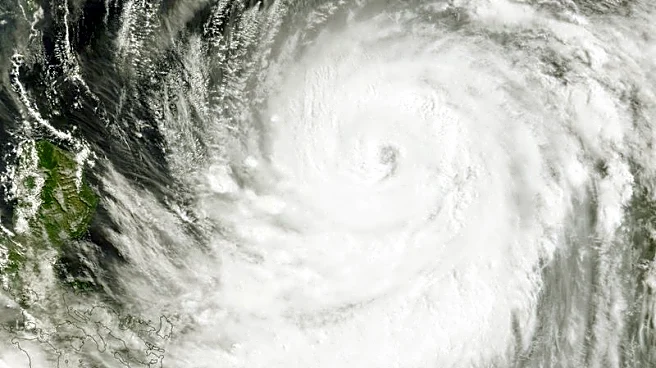
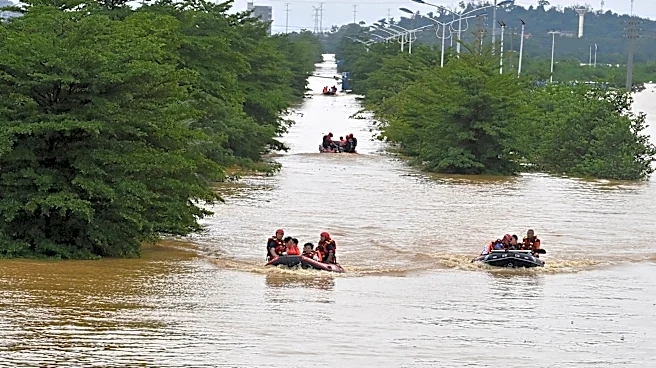
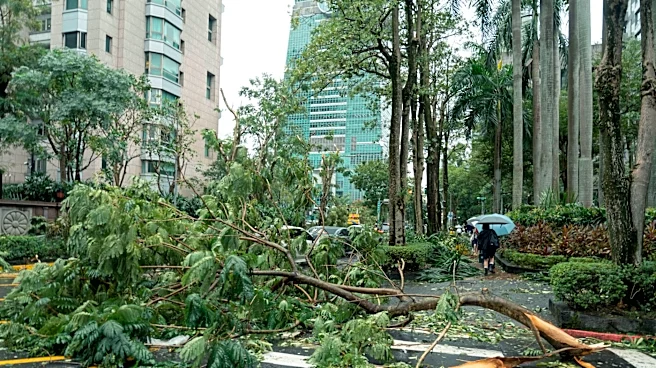
China has evacuated over 1.8 million people as Typhoon Bavi approaches the eastern city of Wenzhou. The typhoon, which has already impacted Japan's southern Sakishima islands and brushed past northern Taiwan, is expected to make landfall near Wenzhou,
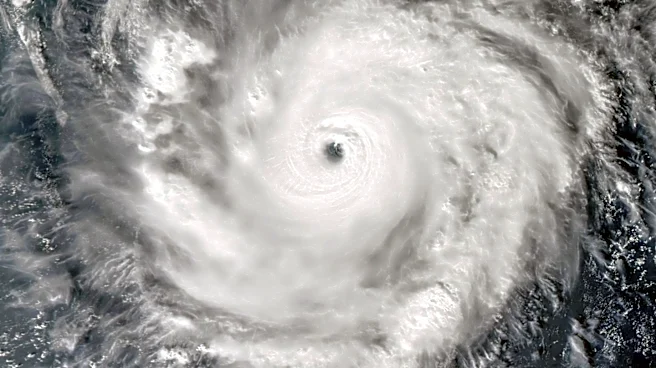
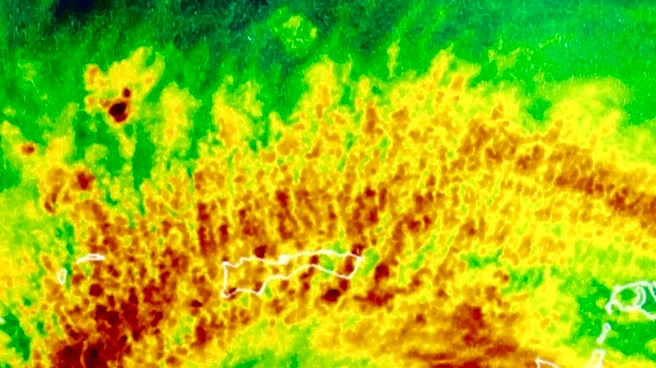
a city with a population of approximately 10 million. Despite weakening over cooler seas, Bavi remains a significant threat due to its heavy rain bands. The National Meteorological Center reported that Bavi had maximum sustained winds of 90 mph, classifying it as a Category 1 storm. In preparation, more than 1.7 million people have been evacuated from Zhejiang province, where Wenzhou is located, and over 100,000 from neighboring Fujian province. The typhoon has also led to the cancellation of numerous flights and the closure of schools and offices in affected areas.
Why It's Important?
The evacuation of nearly 2 million people underscores the severe impact of Typhoon Bavi on China's eastern regions. The storm's approach has prompted significant logistical efforts to ensure the safety of residents, highlighting the vulnerability of densely populated coastal areas to extreme weather events. The economic implications are considerable, with disruptions to transportation and potential damage to infrastructure and property. The situation also reflects broader challenges related to climate resilience and disaster preparedness in the face of increasingly frequent and intense storms. The response to Bavi will be closely watched as a measure of China's capacity to manage such natural disasters effectively.
What's Next?
As Typhoon Bavi continues its path towards Wenzhou, authorities are likely to maintain and possibly expand evacuation efforts to ensure public safety. The focus will be on minimizing casualties and damage, with emergency services on high alert. Post-landfall, the priority will shift to recovery and rebuilding, assessing the storm's impact on infrastructure and communities. The response may involve significant government resources and coordination with local agencies to restore normalcy. Additionally, the event may prompt discussions on improving future disaster preparedness and infrastructure resilience in vulnerable regions.