







What's Happening?
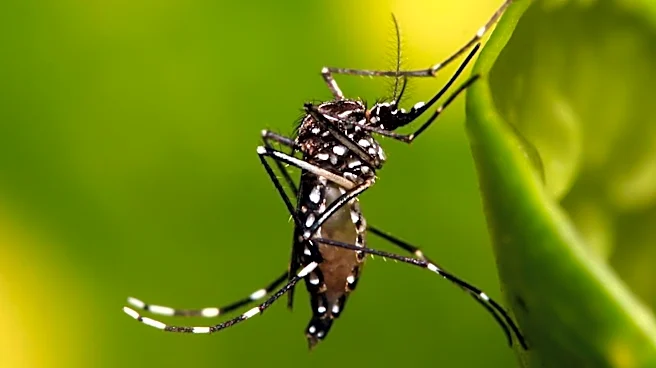
Los Angeles is experiencing a significant increase in mosquito activity, primarily due to the proliferation of invasive Aedes aegypti and Aedes albopictus species. These mosquitoes, known as 'ankle-biters,' are active during the day, unlike native nocturnal
species, and are capable of transmitting viruses such as dengue, chikungunya, Zika, and yellow fever. The current crisis is exacerbated by recent extreme heat, humidity, and standing water, which create ideal breeding conditions. Mosquito season in Southern California now extends across much of the year, rather than being confined to a short summer window. While large outbreaks of these tropical viruses have not yet materialized in California, public health officials are concerned. Los Angeles County has already documented at least 100 cases of West Nile virus and five deaths linked to mosquitoes this year, highlighting the immediate threat posed by these insects. The presence of these invasive species has made outdoor life challenging for residents, leading to widespread discomfort from bites.
Why It's Important?
The surge in invasive mosquito populations in Los Angeles carries significant public health implications for the U.S. The potential for widespread transmission of diseases like dengue, chikungunya, and Zika, which are currently not endemic to California, could strain healthcare systems and introduce new public health challenges. The extended mosquito season means a longer period of risk for residents, requiring sustained public health interventions. Economically, increased mosquito activity could impact tourism and outdoor recreation, which are vital to California's economy. Residents are already spending considerable amounts on repellents and protective measures, indicating a direct financial burden. The situation also underscores the broader issue of climate change and its role in expanding the geographical range and activity periods of disease vectors, potentially leading to similar challenges in other U.S. regions. The current situation serves as a critical warning for urban planning and public health strategies nationwide.
What's Next?
State and county agencies are focusing on aggressive surveillance, targeted control measures, and public education campaigns to prevent the emergence of large-scale outbreaks of tropical viruses. These efforts aim to monitor mosquito populations, reduce breeding sites, and inform the public about protective measures. Residents are advised to eliminate standing water around their homes, use repellents, and take precautions during peak mosquito activity times. Further research into mosquito behavior and effective control methods will likely be prioritized. The long-term strategy will involve adapting to a changing climate that favors mosquito proliferation, potentially leading to more integrated pest management approaches and community-wide initiatives to mitigate the risks. Public health officials will continue to track cases of West Nile virus and other mosquito-borne illnesses to assess the effectiveness of current interventions and adjust strategies as needed.
Beyond the Headlines
The escalating mosquito problem in Los Angeles highlights a deeper ecological shift driven by climate change and globalization. The introduction of invasive species like Aedes aegypti and Aedes albopictus, coupled with warmer and wetter conditions, creates a new normal for urban environments. This situation challenges traditional public health models, which often rely on seasonal interventions. The ethical debate around mosquito control, including the potential for large-scale eradication efforts, is also brought to the forefront. While some scientists argue for the benefits of eliminating mosquitoes due to their role in disease transmission, others raise concerns about unforeseen ecological consequences. The current scenario in Los Angeles could serve as a blueprint for how other U.S. cities might need to adapt their infrastructure and public health policies to combat emerging vector-borne disease threats in a rapidly changing world.