
What's Happening?
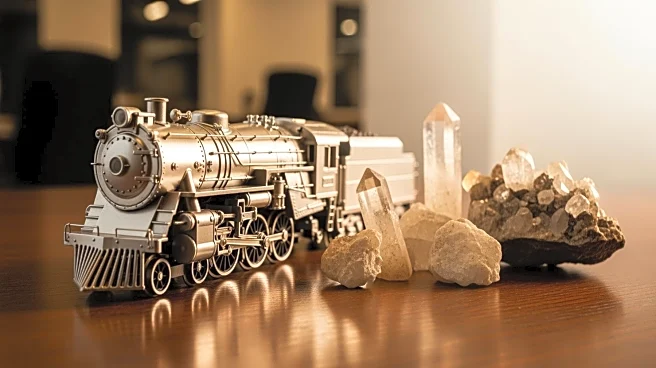
The United States has proposed selling American-made locomotives to Pakistan and expressed interest in collaborating on the country's mineral resources sector. This offer was discussed during Pakistani
Finance Minister Muhammad Aurangzeb's visit to Washington for the IMF annual meetings. U.S. officials, including special advisers Raymond Emory Cox and Ricky Gill, emphasized the importance of protecting American commercial interests. Pakistan Railways, facing financial constraints, has previously acquired 55 locomotives from the U.S. and is currently focused on repairing its existing fleet. Additionally, the U.S. has shown interest in Pakistan's critical minerals, with Congress allocating $135 billion globally for investment in this sector. The U.S. Export-Import Bank has also approved a $1.25 billion loan for the Reko Diq Mining Company in Balochistan.
Why It's Important?
This development signifies a strengthening of economic ties between the U.S. and Pakistan, with potential benefits for both countries. For Pakistan, acquiring new locomotives and enhancing its mineral sector could lead to infrastructure improvements and economic growth. The U.S., on the other hand, stands to gain from increased commercial engagement and strategic access to critical minerals, which are vital for clean energy and high-tech industries. This cooperation could also enhance geopolitical relations, providing the U.S. with a foothold in a region of strategic importance.
What's Next?
Future steps may include formalizing agreements on locomotive sales and mineral cooperation. The U.S. Under Secretary for Energy, Jacob Helberg, is expected to visit Pakistan, potentially advancing discussions on energy and mineral resource collaboration. Both countries are likely to continue technical-level talks to turn these offers into concrete achievements, which could involve further negotiations on financial terms and project specifics.